
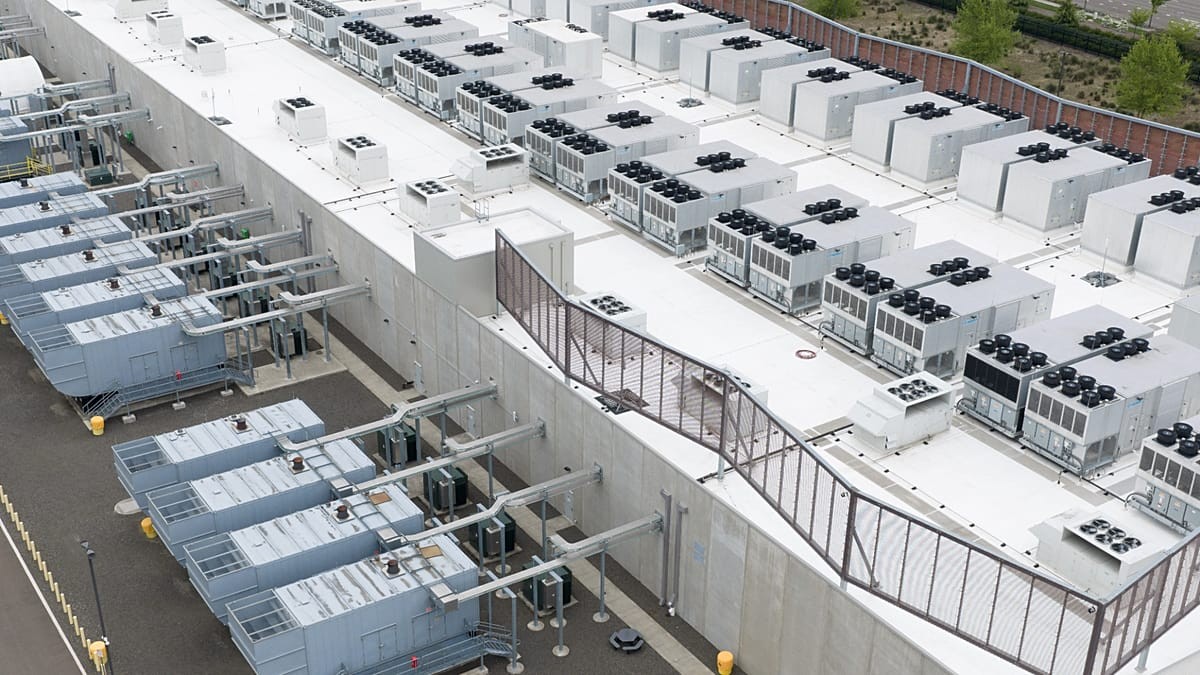
Europe is racing to build the digital infrastructure necessary to compete in the artificial intelligence era, but it faces a critical bottleneck: the continent’s electricity grid is already at capacity.
While the United States hosts approximately 5,400 data centres compared to Europe’s 3,400, European nations are desperate to close this technological gap. However, a new study by the European energy and digital policy think tank Interface warns that without urgent systemic reform, Europe’s AI investments risk becoming “stranded assets”—costly facilities that secure power contracts but cannot effectively operate due to grid constraints.
The core issue is not just the lack of renewable energy, but the physical inability of existing transmission networks to handle the sudden, massive spikes in demand created by modern AI clusters.
The Scale of Energy Consumption
To understand the strain on the grid, one must look at the sheer volume of electricity required for AI training and inference. The scale is difficult to grasp without comparison:
- Average Household: A typical European home consumes about 3,600 kWh per year (roughly 10 kWh per day).
- AI Data Centre: A single advanced AI cluster can consume the daily equivalent of electricity used by 250,000 households.
The power capacity of top-tier AI clusters has exploded in recent years. In 2019, leading clusters operated at around 13 MW. By 2025, facilities like xAI’s “Colossus” are projected to require 280–300 MW.
To put this in perspective, the training of ChatGPT-4 reportedly consumed 46 GWh of energy. This is equivalent to a sustained draw of 20 MW over three months—enough to power the entire Brussels Capital Region for more than four days. As the International Energy Agency projects, global data centre electricity use is expected to more than double by 2030, driven largely by these AI workloads.
Why Traditional Grids Fail AI
The fundamental problem is that Europe’s electricity grid was designed for a different era. Traditional server farms operated with modest, flexible power loads. Modern AI clusters, however, function like electro-intensive industrial plants. They pack specialised chips that run at near-maximum intensity for weeks on end, creating a constant, heavy load on the network.
When a single facility demands hundreds of megawats simultaneously, it does not simply “plug in.” It strains the entire local system, potentially causing congestion and forcing costly upgrades to substations and transmission lines. This crowding out effect impacts other users competing for the same limited capacity.
“Constructing multi-hundred-megawatt facilities that fail to use their contracted capacity effectively would be unsustainable not only economically but also from an energy- and climate-system perspective.”
— Interface Report
The “FLAP-D” Bottleneck
The crisis is most visible in Europe’s primary data centre markets, known in the industry as FLAP-D : Frankfurt, London, Amsterdam, Paris, and Dublin. In these hubs, the queue for grid connections has become so long that it effectively acts as a ban on new development.
- Wait Times: New facilities in FLAP-D markets wait an average of 7 to 10 years for a grid connection. In the most congested areas, this can rise to 13 years.
- De Facto Moratoriums:
- Ireland: Has paused new data centre approvals in Dublin until 2028.
- Netherlands & Frankfurt: Have effectively blocked new connections until at least 2030.
These constraints are impacting even the most well-capitalised players in the industry. Reports indicate that OpenAI has put investments in the UK and Norway on hold due to prohibitive electricity prices and grid instability. This signals a broader trend: Europe’s energy constraints are no longer just a logistical hurdle for smaller firms, but a strategic barrier for global tech giants.
A Complex Energy Landscape
Europe’s grid is not struggling in isolation. It is simultaneously managing:
1. The electrification of transport and heating.
2. The uneven integration of renewable energy sources.
3. Geopolitical instability affecting gas and power markets, exacerbated by the war in Ukraine and conflicts in the Middle East.
Adding hundreds of megawatts of AI infrastructure to this fragile mix risks making energy more expensive and less reliable for everyone. The current approach of treating AI data centres as standard commercial real estate is failing because their energy profile is fundamentally different.
The Path Forward
The Interface report argues that for Europe to maintain its AI ambitions, it must change how it plans and regulates these facilities. Key recommendations include:
- Integrated Planning: AI facilities must be integrated into national and EU grid planning from the outset, rather than as an afterthought.
- Renewable Siting: Decisions on where to build data centres must be tied directly to the availability of renewable energy and grid capacity.
- New Regulatory Status: Large AI compute clusters should be conceived, regulated, and operated as critical energy infrastructure, distinct from traditional data centres.
Conclusion
Europe faces a stark choice: adapt its energy infrastructure to support the AI revolution or watch its digital ambitions stall behind grid queues and soaring costs. Without treating AI data centres as unique energy consumers requiring dedicated planning, the continent risks building expensive infrastructure that cannot be powered.