
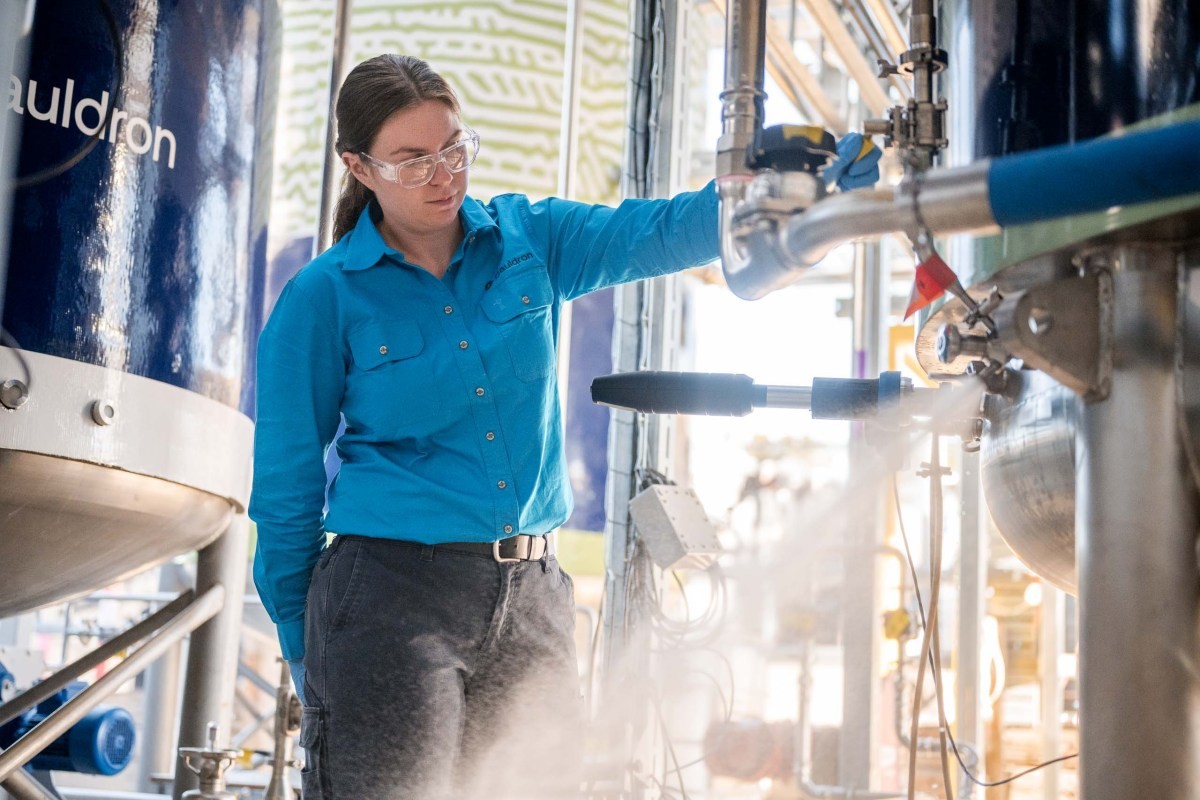
Cauldron Ferm is revolutionizing industrial biotechnology by turning microbes into continuous production systems. The company’s core technology, refined over four decades, addresses a critical bottleneck in fermentation: traditional batch processing. Unlike breweries or vineyards that stop production to harvest, Cauldron Ferm enables microbes to operate as nonstop assembly lines, dramatically lowering costs and boosting efficiency.
From Niche Origins to Rapid Growth
The firm traces its roots back to the 1960s or 70s, when David and Polly McLennan pioneered the concept of microbial protein production. They recognized that existing fermentation methods were too expensive for widespread food applications, where price sensitivity is high. Most fermentation happens in batches. Ingredients go in and the microbes work for a while, but then the process stops when it’s time to take out the finished product.
After decades of development, the technology remained under the radar until Michele Stansfield joined the company in 2012. She recognized the potential to scale the continuous fermentation process, acquiring the intellectual property and transforming Cauldron Ferm from a small service provider into a high-growth startup.
Securing $13.25 Million in Series A2 Funding
Cauldron Ferm has recently secured $13.25 million in a Series A2 funding round, led by Main Sequence Ventures, with participation from Horizons Ventures, NGS Super, and SOSV. This follows a previous $6.5 million raise in 2024, bringing the total funding to $19.75 million. The company intends to use these funds to enhance its “technology moat,” further solidifying its competitive advantage.
Hyper Fermentation: Maximizing Microbial Output
Cauldron Ferm’s technology, dubbed “hyper fermentation,” keeps microbes operating at peak productivity. Unlike traditional fermentation, which relies on batch processing, Cauldron Ferm’s approach allows microbes to work continuously. This can be implemented into existing fermentation plants with minor modifications. The company works with clients to optimize growing conditions, including nutrient mixes, to maximize output.
Currently, Cauldron Ferm focuses on producing fats and proteins, including whey protein, which can integrate easily into existing supply chains. Stansfield points out that biology has the potential to produce sixty percent of inputs to the global economy, and the company is diversifying into other high-value products.
“Food was where we started, but now we’re starting to really diversify.” — Michele Stansfield, CEO of Cauldron Ferm.
This expansion signals a broader shift toward sustainable, biology-based manufacturing. As production costs drop and efficiency rises, microbial fermentation is poised to disrupt traditional industries.