
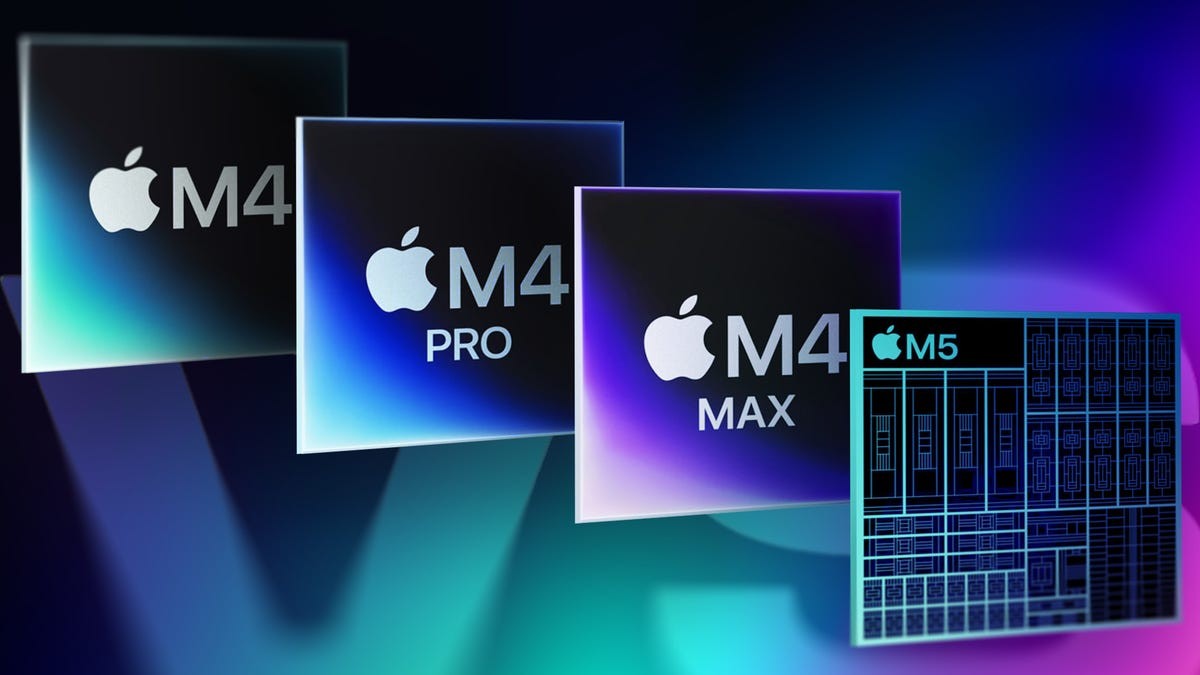
Choosing an Apple silicon chip can be confusing. The company offers a range of options – from the base M4 to the high-end M3 Ultra – each with varying performance capabilities. Unlike Windows PCs, where components can be upgraded later, Apple’s chips are fixed at the time of purchase. Understanding the differences between these processors is essential for maximizing your investment.
Why This Matters: The Rise of Integrated Silicon
Apple’s shift to its own silicon (M-series chips) has been a major trend in the tech industry. The company now controls both hardware and software, optimizing performance and efficiency in ways that were previously impossible. This also means that the processor choice is crucial, as upgrading later isn’t an option.
Decoding the Lineup: M4, M5, Pro, Max, and Ultra
The current Apple lineup includes the M4, M5, M4 Pro, M4 Max, and the older M3 Ultra (found in some high-end models). The company also continues to use the two-generation-back M2 Ultra in the Mac Pro, though a refresh of that system is unlikely soon.
Here’s a breakdown to help you pick the right chip:
- M4/M5: These chips are ideal for everyday tasks like browsing, streaming, light photo editing, and basic productivity. The M5 offers a modest performance increase (10-20%) in CPU speed, and a significant improvement in GPU performance thanks to new Neural Accelerators that speed up AI tasks like image generation.
- M4 Pro: For users who regularly work with demanding applications like heavy video editing, the M4 Pro provides a noticeable performance boost. It’s a solid choice for power users who want to future-proof their machines.
- M4 Max: If your workflow revolves around GPU-intensive tasks like 3D rendering, CAD, 8K video editing, or AI/machine learning, the M4 Max is the way to go. Its higher GPU core count, ProRes accelerators, and Thunderbolt 5 support make it significantly faster than the Pro variant.
- M3 Ultra: The M3 Ultra is Apple’s current top-end chip, designed for professionals in scientific analysis, architectural rendering, and heavy video processing. It offers the highest core counts, supports up to 512GB of memory, and features four ProRes accelerators for maximum performance.
Performance: It’s Not Just About the Chip
Raw performance numbers don’t tell the whole story. A fast GPU paired with a slow CPU can create bottlenecks. For example, rendering a complex 3D model might be GPU-intensive, but the final export might rely heavily on the CPU, leading to frustrating delays.
The M4 and M5 offer enough power for most users, but the higher-end chips excel in sustained, demanding workloads. The M4 Pro delivers roughly 36% faster performance in multicore tasks compared to the M5, while the M4 Max offers substantial improvements for GPU-heavy operations.
The Bottom Line: Choose Wisely
The best Apple silicon chip for you depends on your specific needs. For most users, the M4 or M5 will suffice. If you work with demanding professional applications, consider the M4 Pro or M4 Max. And if you need the absolute best performance, the M3 Ultra remains Apple’s flagship option. Remember, once you buy, you can’t upgrade later – so choose carefully.