
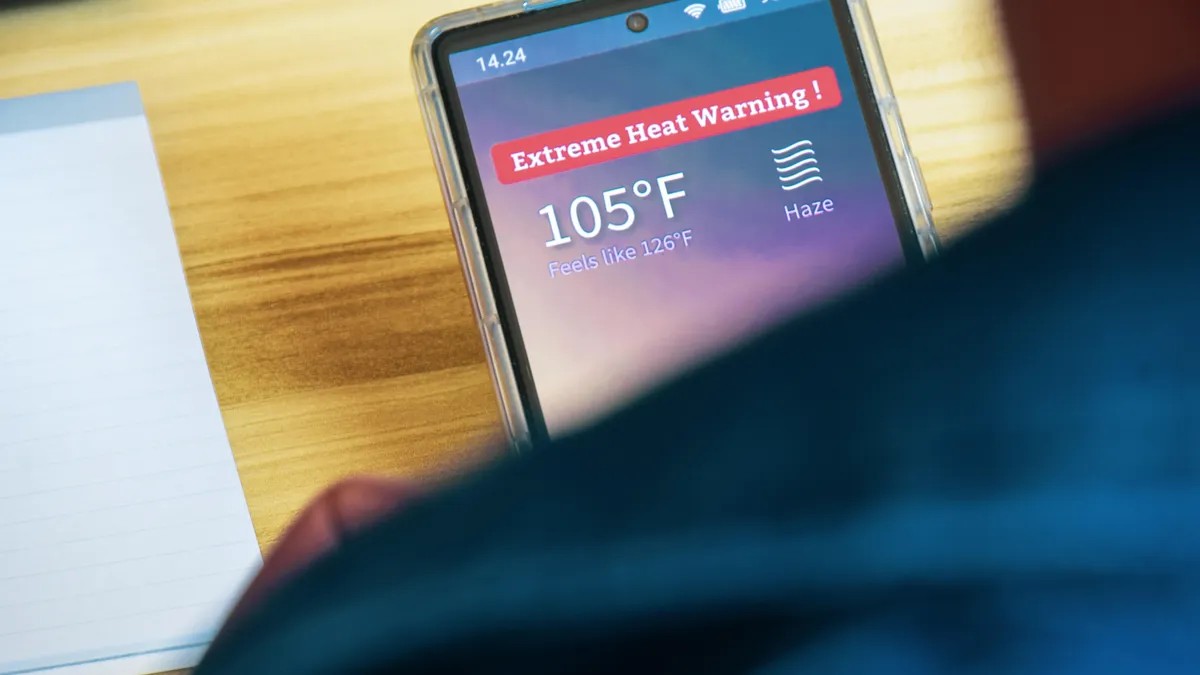
Summer breaks batteries. It happens fast, usually unnoticed, until your phone refuses to charge in September. You leave it on a dashboard. On a car seat. Maybe it charges overnight while you sleep. Nothing feels catastrophic. Yet by fall, that device holds half the charge it did in spring. The fix isn’t complicated.
Phones are more fragile than we admit.
Last year, the Pixel 6a made headlines for exploding. That wasn’t a fluke. Modern iPhones and Androids cook under the sun, too. Heat stresses internal components. It slows performance. It kills the lifespan of your gadget. If you are hiking, binge-watching by a pool, or just driving around, your device is under attack.
What triggers the melt
Apple says anything above 95 Fahrenheit forces a phone to go into survival mode. Why? Because silicon hates the oven.
Direct sunlight is the primary suspect. A car parked on a hot day? Yes, that. Running navigation apps in 90-degree heat? Definitely. Charging while gaming? That’s a bad mix. Then there are the usual suspects: a failing battery, a cheap cable, buggy software, or rogue malware. A suffocating phone case traps the heat like a wool blanket in July.
When the temperature spikes, your phone panics. It throttles speed. It might shut off completely. Charging slows down or stops. Your signal weakens. The camera flash disables itself to prevent fire. If this continues, the damage becomes permanent. The battery swells. The SIM card burns out. Irreversible.
The simple rule
Get it out of the sun.
On a cloudy day, grass might be safe. At the beach? Minutes. The asphalt or car dashboard? Even faster. Hide the phone in your pocket. Put it in a bag. Bury it under a towel on the dash. Anywhere shield from direct rays works.
But heat itself is the enemy. Not just light. Inside a parked car, the air hits 143 Fahrenheit within an hour if it is 100 outside. The phone in the cupholder isn’t safe, even in the shade. It will cook. Don’t leave your device in saunas, kitchens during a bake-off, or near desert fires.
Apple recommends keeping phones between 32 and 95 Fahrenheit for optimal performance. They suggest a survival range of negative 4 to 113. Don’t test the limits.
Don’t put it in the freezer.
People try it. The Apple support boards are full of stories about cracked screens and condensation damage. An icebox ruins electronics as badly as fire does. Just leave it be.
Tweaks that help
Stop playing PUBG or streaming Netflix while it charges. Graphics and processors generate immense heat. Doing both at once is a recipe for disaster. Update your software, too. Bugs often cause phantom heat. Keep apps patched.
Use the original charger. Cheap third-party bricks can send erratic voltage. Your phone won’t know what to do. It’ll overheat trying to compensate.
None of this requires effort. Just awareness. You don’t need to wrap your phone in thermal foil or live in a basement. You just need to respect the fact that lithium-ion batteries hate summer. Will you remember to put it away before you drive to the beach? Probably.