
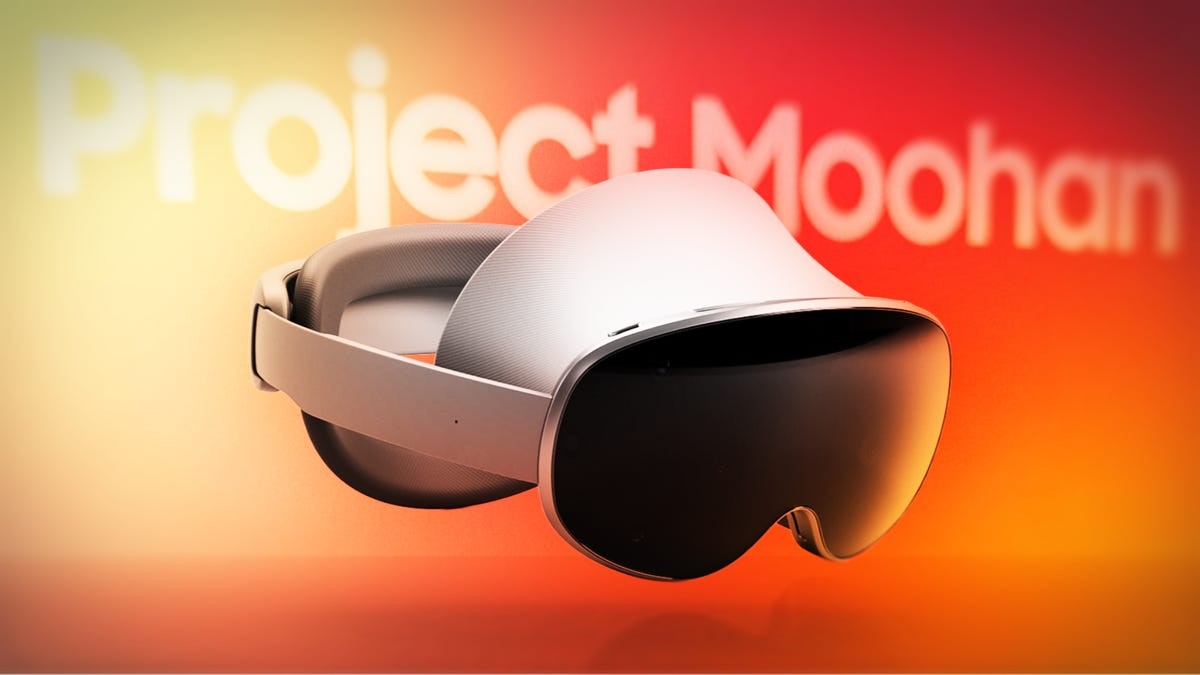
Google is making another push into augmented and mixed reality, this time with a collaborative headset dubbed “Project Moohan.” Unlike past attempts such as Google Glass, this venture leverages partnerships with Qualcomm and Samsung to improve both hardware and software. The goal: deliver a mixed reality experience that overcomes the limitations of early devices and competes with emerging leaders like Meta and Apple.
The Core Collaboration
The project centers on integrating Google’s Android and Gemini AI, Qualcomm’s XR2 processing power, and Samsung’s ergonomic design expertise. This is not Google’s first rodeo in wearable tech, but executives acknowledge past failures and emphasize the advancements in computational power and AI that make a viable product possible now. The focus is shifting from simple AR overlays to immersive, AI-driven mixed reality where virtual elements blend seamlessly with the real world.
Key Improvements in Development
Attendees at the Snapdragon Summit 2025 got a glimpse of the headset, though it was kept under wraps. Google and Qualcomm representatives highlighted significant refinements in weight balance and ergonomics, addressing the comfort issues that plagued earlier designs. Apple’s Vision Pro, for example, was criticized for being front-heavy; Project Moohan aims to avoid this by prioritizing long-term wearability.
Beyond hardware, the integration of Gemini AI is central. The idea is to create an AI assistant that can interact with the mixed reality environment in real time, providing contextual information, answering questions, and even exploring virtual spaces with the user. This builds on Google’s past experiments, like Google Glass, but with the benefit of vastly improved technology.
The Future: From Headsets to Smart Glasses
While Project Moohan remains in development, Google is already planning a smaller form factor for future smart glasses. These glasses will compete directly with Meta’s Ray-Ban Display and other similar devices. To stand out, Google plans to offer a wider range of frame styles through partnerships with brands like Warby Parker and Gentle Monster. This addresses a key consumer barrier: the need for devices that are both functional and aesthetically appealing.
The combination of Google’s software, Qualcomm’s chips, and Samsung’s design could create a compelling mixed reality product. The key will be delivering an experience that is not only technically advanced but also comfortable, stylish, and intuitive.
Ultimately, Project Moohan represents a renewed effort by Google to dominate the wearable tech space. Whether this time will be different remains to be seen, but the partnership with Qualcomm and Samsung signals a more serious and strategic approach than in the past.