
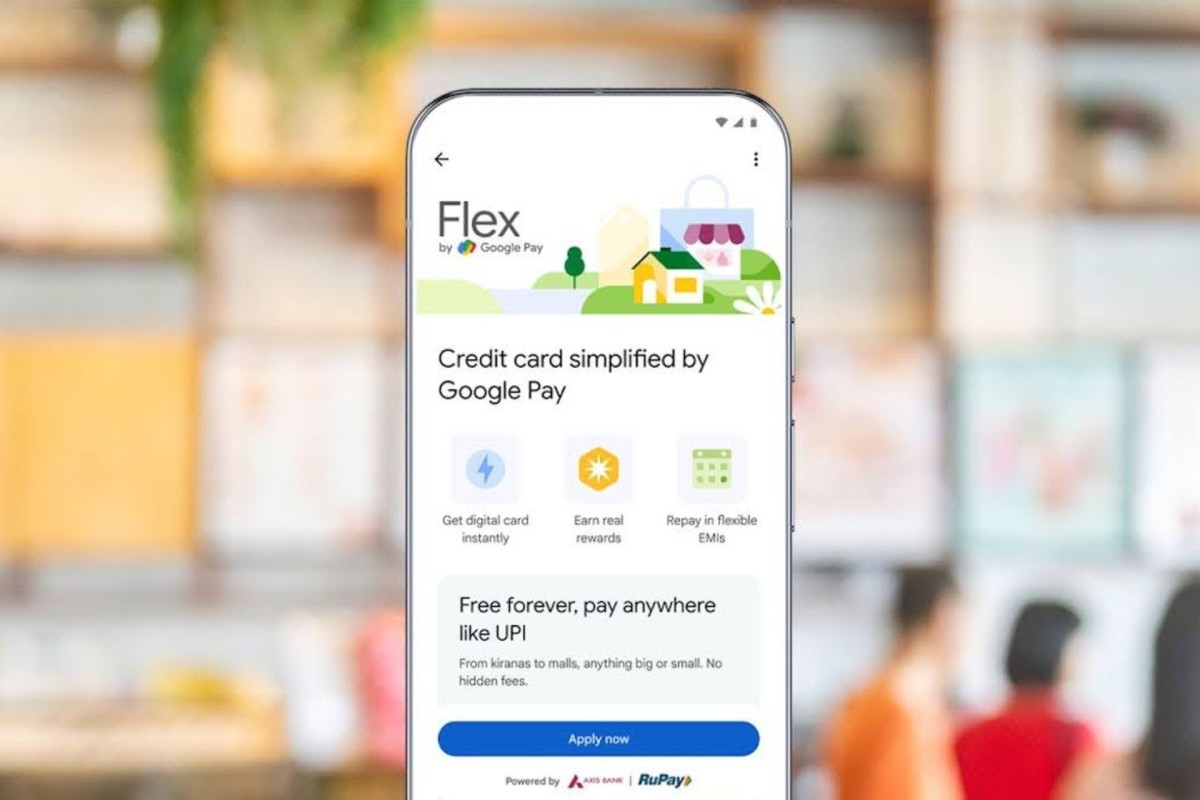
Google is aggressively expanding its presence in India’s rapidly evolving financial landscape, introducing a new UPI-linked credit card and family-focused digital payment tools. This move targets a massive market where access to traditional credit remains limited – fewer than 50 million Indians hold credit cards despite a population exceeding 1.4 billion. The company’s strategy leverages the widespread adoption of Unified Payments Interface (UPI) to embed financial services directly into its Google Pay platform.
New Credit Card: Flex by Google Pay
Launched in partnership with Axis Bank, Flex by Google Pay is a co-branded credit card designed to bridge the gap between digital payments and credit access. The card operates on the RuPay network and offers a rewards system with virtual “Stars” redeemable for cash value. Users can manage spending, choose repayment options (full or installments), and control security settings within the Google Pay app.
This launch is part of Google’s broader effort to increase credit availability in India, where it already offers personal and gold-backed loans through its platform. By tapping into its vast digital user base, Google provides Axis Bank with a large customer pool for credit distribution. The company plans to onboard additional issuer partners to scale the offering.
Addressing a Growing Market
India’s credit card market has grown by roughly 14% annually over the past three years, reaching around 110 million outstanding cards. Transaction volumes have increased by nearly 30%, with average spending per card rising from $1,450 to $2,100. However, this growth has largely been driven by existing cardholders, not new users. Google’s Flex aims to attract first-time credit users by offering flexible repayment options and addressing concerns about unpredictable billing.
“We think we now understand the problem, the space, and the user well enough to solve something uniquely for them,” said Sharath Bulusu, Google Pay product management director.
Family Payment Controls: Pocket Money Feature
Alongside the credit card, Google is introducing Pocket Money, a feature allowing parents to grant children limited access to digital payments. Built on the UPI Circle framework, parents can set monthly spending caps (up to ₹15,000) or approve individual transactions. This provides parental control over funds until the moment a transaction is made, unlike traditional prepaid cards.
This feature is designed to broaden Google Pay’s user base and compete with rivals like PhonePe. Existing fintechs such as FamPay and Junio have offered similar prepaid solutions, but Google’s UPI Circle approach offers real-time parental oversight.
Competition and Future Growth
Google’s move enters a competitive market, with Amazon, Flipkart, and PhonePe already offering co-branded credit products. Consumer internet platforms like Swiggy and MakeMyTrip also partner with banks to offer credit cards. Co-branded cards are projected to capture over 25% of the Indian credit card market by 2028, growing at an annual rate of 35–40%.
The company is also enhancing tools for small businesses on Google Pay, including customer review integration with Google Maps and AI-powered advertising features. With over 530 million active Google Pay users and 23 million onboarded merchants, Google is confident in its ability to introduce new financial products to its existing user base.
Google’s expansion in India signifies a broader trend of technology companies embedding financial services into everyday payment platforms, aiming to reshape access to credit and digital financial literacy.