
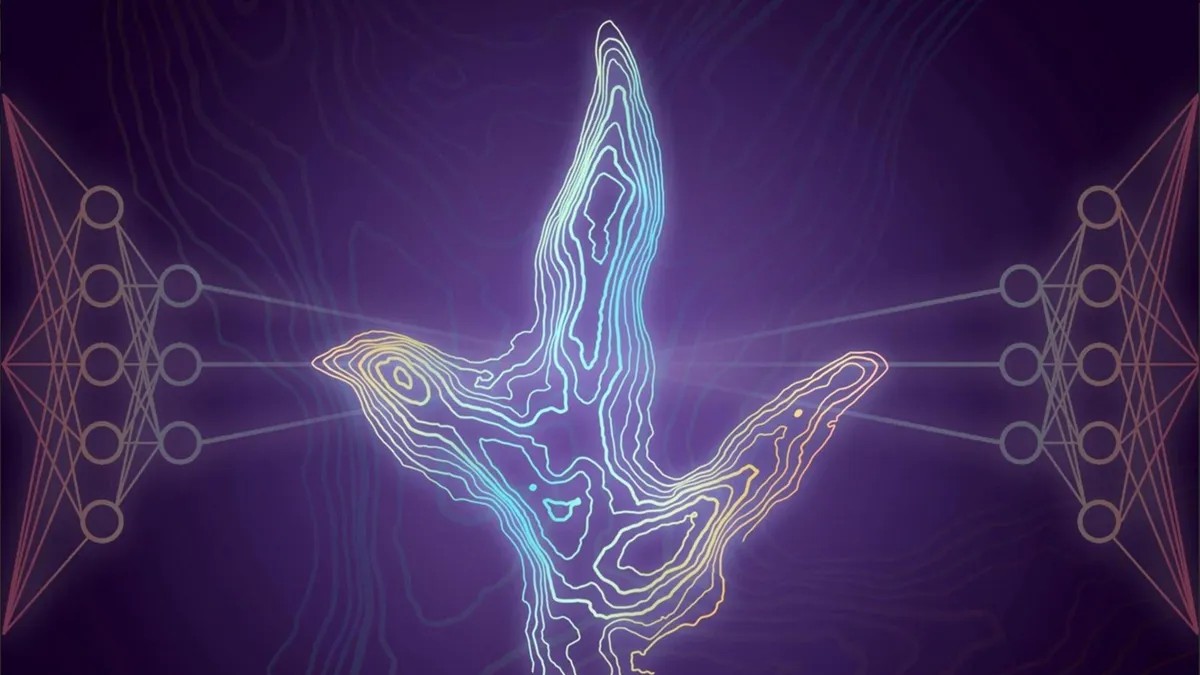
An international team of paleontologists has developed an artificial intelligence (AI) application, Dinotracker, designed to improve the accuracy of dinosaur footprint identification. The tool addresses a long-standing challenge in paleontology: the subjectivity and potential bias that can arise when identifying species from fossilized footprints.
The Problem with Footprint Analysis
Dinosaur footprints, often millions of years old and distorted by geological shifts, can be notoriously difficult to classify. Human interpretation introduces variability, as even experts can disagree on species identification. This new AI aims to remove that subjectivity. The study, published in the Proceedings of the National Academy of Sciences, shows that the AI is highly reliable.
How Dinotracker Works
The AI was trained on a massive dataset of both real and simulated footprints, accounting for natural distortions like compression and edge shifting. It focuses on eight key characteristics : toe width, heel position, surface area, and weight distribution. By analyzing these traits, Dinotracker compares new footprints to its database to determine the most likely species responsible.
Testing reveals that the AI aligns with human expert classifications 90% of the time. Importantly, the system is “unsupervised” during training. It does not rely on pre-existing labels like “bird” or “theropod,” instead learning to encode shapes and compare them to human-assigned categories after training.
Implications for Bird Evolution
The research has already revealed intriguing connections between dinosaur footprints and bird evolution. Analyzing tracks dating back over 200 million years, Dinotracker found strong structural similarities to both extinct and modern birds, suggesting that bird origins may be far older than previously believed.
However, scientists caution that footprints alone are insufficient proof. Skeletal evidence is still the gold standard for understanding evolutionary timelines. The AI serves as a valuable tool to narrow down possibilities, but not to rewrite history.
“It is essential to keep in mind that over these millions of years, lots of different things can happen to these tracks… ultimately makes it too difficult to interpret footprints, which was the motivation for our study.”
The team anticipates Dinotracker will become a staple tool for paleontologists, with its database expanding as more experts contribute. The AI’s potential to refine our understanding of dinosaur behavior and evolution is significant.
In conclusion, this AI-driven approach promises to make paleontology more precise, less subjective, and potentially unlock new insights into the ancient world.