
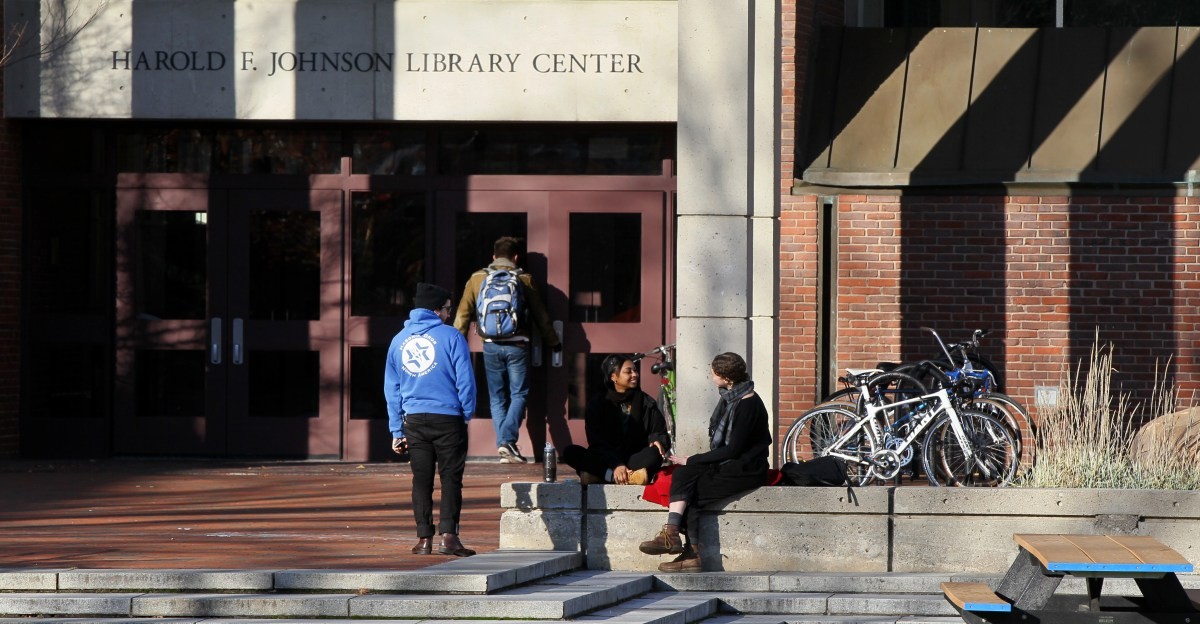
The recent announcement that Hampshire College —a storied private liberal arts institution in Massachusetts—will close after the fall 2026 semester is more than just a single school’s misfortune. It is a signal of a much larger, systemic collapse currently sweeping through American higher education.
While elite, well-endowed universities like Harvard and Yale remain insulated, a “perfect storm” of economic, demographic, and cultural shifts is pushing smaller regional colleges toward insolvency.
The Financial Trap: Debt and “Discounting”
One of the most significant, yet misunderstood, drivers of these closures is institutional debt. While public discourse often focuses on student loan debt, many colleges are drowning in their own borrowing. Servicing this debt creates a massive drain on operating budgets, leaving little room for actual education.
To combat declining enrollment, many colleges have turned to a precarious survival tactic: aggressive tuition discounting.
– To attract students, schools offer massive financial aid packages.
– In many cases, the “discount rate” exceeds 50% of the total revenue.
– At Hampshire College, this figure reportedly climbed above 75%.
Essentially, these institutions are giving away the majority of their revenue just to keep seats filled, a business model that is fundamentally unsustainable.
The Demographic Cliff and Changing Mindsets
The math behind the crisis is stark. The United States is approaching a “demographic cliff” —a sharp decline in the number of 18-year-olds available to enroll in college. This is a direct consequence of the Great Recession in 2008; fewer children were born during that economic downturn, and those children are now reaching college age.
Furthermore, the cultural value of a degree is shifting:
* Declining Enrollment: In 2016, roughly 70% of high school graduates went to college; today, that number has dropped to just over 60%.
* Skepticism of ROI: More students are questioning the “Return on Investment” (ROI) of a four-year degree, weighed against rising costs and uncertain job prospects.
* International Student Loss: Small colleges often rely on international students to bolster revenue, as they typically pay full tuition. However, stricter visa policies and political shifts have led to a significant decline in this vital student demographic.
The Human and Economic Cost
When a college closes, the consequences ripple far beyond the campus gates.
For Students: A Broken Path
The impact on current students is often devastating. Research indicates that when a school shuts down:
1. Only about half of students successfully transfer.
2. Of those who do transfer, half never actually graduate.
3. Common obstacles include the loss of credit transfers and the prohibitive cost of moving to a new institution.
For Communities: The “Doom Loop”
Colleges are often the economic lifeblood of small, rural towns. A closure triggers a “doom loop”:
* Job Loss: Colleges are major local employers.
* Economic Stagnation: The loss of student spending (rent, food, services) hurts local businesses.
* Brain Drain: Colleges act as a pipeline, bringing young people into aging populations to start businesses and diversify the local economy. Without them, these towns face further decline.
A Growing Cultural Divide
The crisis is exacerbated by a growing public antipathy toward higher education. Many perceive universities as elitist or ideologically biased. This perception has created a political environment where funding cuts and legal challenges are increasingly common, further destabilizing institutions that are already financially fragile.
“Not everyone needs to go to college, but somebody needs to go to college.”
As the market corrects itself, the United States faces a strategic risk: losing the very institutions that cultivate the innovation and skills required to remain globally competitive.
Conclusion
The disappearance of small colleges is not just a series of isolated business failures; it is a fundamental restructuring of the American educational landscape. As demographic declines and financial instability converge, the loss of these institutions threatens to leave both students and local economies without a vital foundation for growth.