
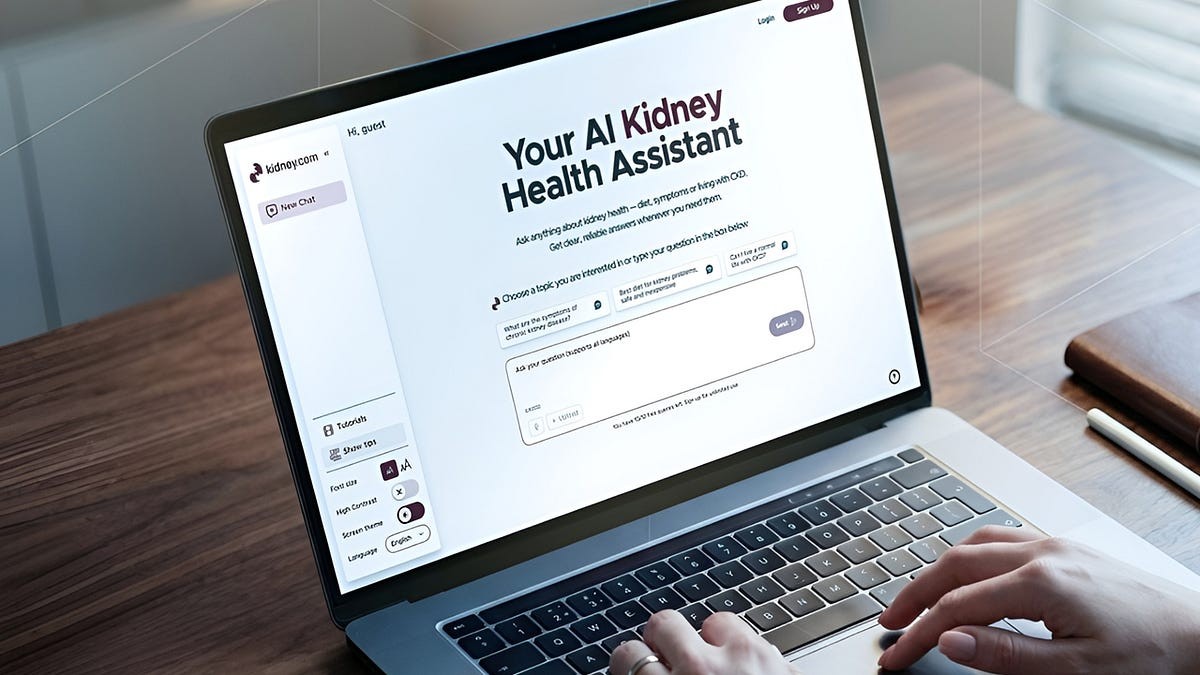
Abu Dhabi-based global health company M42, in partnership with its renal care subsidiary Diaverum, has launched kidney.com, a free, AI-powered educational platform designed to improve kidney health management. The platform provides personalized, evidence-based information through a conversational interface, aiming to empower patients with the knowledge needed to manage their conditions effectively and reduce reliance on emergency healthcare services.
Currently available in the UAE, France, Germany, Portugal, and the UK, kidney.com represents a significant shift in how chronic disease education is delivered. By making trustworthy clinical information accessible 24/7, the platform seeks to address a critical gap in patient care: the lack of early, understandable guidance for individuals managing chronic kidney disease (CKD).
Bridging the Knowledge Gap with Clinical Rigor
Chronic kidney disease is one of the fastest-growing and most financially burdensome health challenges facing global systems. In Europe alone, CKD costs an estimated €140 billion annually. In the UAE, prevalence affects 4% to 5% of adults, with rates rising sharply among older populations. Despite these figures, many patients remain poorly informed about their condition until it reaches a critical stage.
kidney.com is designed to intervene early. Unlike general-purpose AI tools, this platform is clinically specialized. It was developed with input from more than 30 nephrologists, physicians, and nurses across 13 countries. Before its public launch, the system underwent rigorous testing, completing over 14,000 simulated chat interactions to ensure accuracy and safety.
Key features include:
* Personalized Education: The AI adapts its responses to the user’s specific knowledge level and health needs.
* Multilingual Support: The platform launches with support for English, Arabic, French, German, and Portuguese.
* Accessibility Tools: Users can utilize voice control and upload product labels for interpretation, aiding those with visual impairments or literacy challenges.
Why This Matters: From Education to Health System Relief
The core premise behind kidney.com is that better-informed patients lead to better health outcomes. Research consistently shows that patients who understand their conditions are less likely to require hospitalization or visit emergency departments. By providing clear, actionable advice, the platform aims to reduce the strain on healthcare systems and lower the overall economic burden of chronic disease.
It is important to note that kidney.com is not a medical device and does not diagnose conditions or prescribe treatments. Instead, it serves as a supportive tool for self-management, encouraging patients to have more informed discussions with their clinical teams. This distinction ensures the platform complements professional medical care rather than replacing it.
Strategic Vision for AI in Healthcare
The launch of kidney.com aligns with M42’s broader strategy to build next-generation healthcare infrastructure powered by AI, data, and genomics. As part of G42, the Abu Dhabi-based AI holding group, M42 has previously developed clinically aligned large language models that have been widely adopted by researchers and medical institutions.
By leveraging these advanced technologies, M42 and Diaverum are addressing a systemic inefficiency: the high cost and low accessibility of renal health education. The platform’s expansion into multiple markets signals a growing trend toward AI-driven preventive care, where technology helps manage chronic conditions before they escalate into crises.
The scale of chronic kidney disease demands scalable solutions. By offering free, high-quality education, kidney.com attempts to democratize access to vital health information, potentially shifting outcomes for millions of patients worldwide.
This initiative underscores a pivotal moment in health tech: the move from passive data collection to active, AI-enabled patient empowerment. As more markets are added, kidney.com could serve as a model for how specialized AI platforms can alleviate pressure on health systems while improving individual quality of life.