
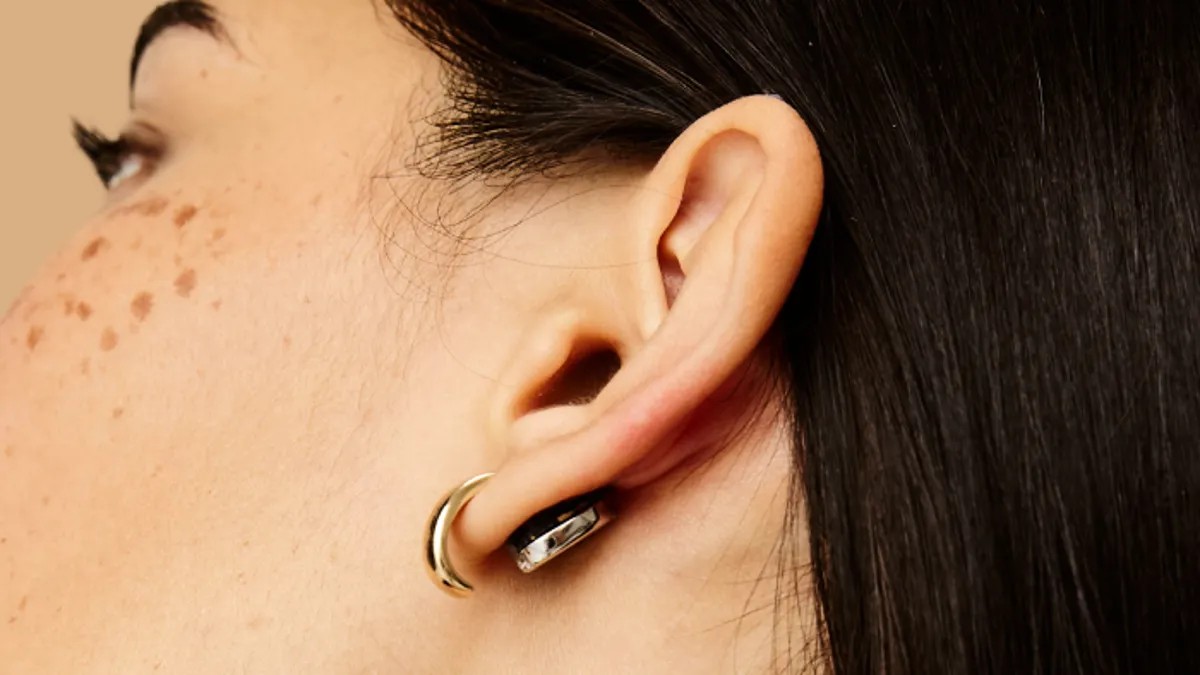
The wearable technology market is currently dominated by wrist-based smartwatches and finger-based smart rings. While effective, these devices often face hurdles regarding bulkiness and the need for frequent charging, which can interrupt continuous health monitoring. Lumia Health is attempting to disrupt this trend by moving the sensor from the wrist to the ear.
Their new product, the Lumia 2, is a miniaturized smart earring that recently launched on Kickstarter, where it has already secured over $800,000 —surpassing its original $10,000 goal by 80 times.
Precision Through Miniaturization
The Lumia 2 is remarkably small, weighing less than one gram and measuring roughly the size of a coffee bean. Despite its size, it houses a sophisticated suite of sensors, including the second-generation PreciseLight sensor.
By placing the device directly behind the ear, Lumia Health leverages a strategic anatomical advantage. The area near the ear contains shallow blood vessels and is close to the heart, providing a stronger, more stable signal that is less prone to the “noise” caused by physical movement compared to wrist-based devices.
Key Health Metrics Tracked:
- Circulatory Health: Real-time blood flow and blood oxygen (SpO2).
- Cardiac Data: Heart rate and Heart Rate Variability (HRV).
- Daily Wellness: Sleep patterns, activity (steps/calories), and readiness scores.
- Biological Tracking: Menstrual cycles and body temperature.
- Event Tagging: Manual logging for caffeine, meditation, or travel.
Solving the “Charging Gap”
One of the primary weaknesses of modern wearables is the “data gap” created when a user must remove the device to charge it—often during sleep, which is precisely when much vital data is collected.
Lumia 2 addresses this with a swappable battery system. Each battery lasts seven days; when one runs low, users simply swap in a fresh battery and place the depleted one on the charger. This ensures the device stays on the body 24/7, providing uninterrupted longitudinal data.
Design and Versatility
To ensure the technology integrates into daily life without looking like a medical gadget, Lumia 2 offers three distinct styles:
1. Studs
2. Huggie hoops
3. Ear cuffs (designed for those without pierced ears)
The devices are available in gold, silver, and titanium finishes. Additionally, the company’s SwitchBack technology allows users to attach the smart components to their existing collection of traditional push-back earrings.
Privacy and Data Ethics
As with all high-level biometric wearables, data security is a critical concern. Lumia Health states that all data is encrypted, anonymized, and access-controlled.
The company offers a voluntary “Data From the People, For the People” program. Users can opt-in to contribute their de-identified data to an open-source pool for medical researchers. While Lumia claims to vet these partners to ensure they serve public health interests, the company has not yet provided specific details on its vetting process for these third-party researchers.
Important Note: The Lumia 2 is a wellness device, not an FDA-cleared medical device. It is intended for tracking and insights, not for the diagnosis or treatment of medical conditions.
Pricing and Availability
The Lumia 2 follows a “hardware + subscription” model, which is becoming increasingly common in the tech industry but remains a point of contention for many consumers.
- Base Hardware Price: $249 (plus additional costs for specific styles like hoops or cuffs).
- Subscription Requirements: To access app insights, cloud storage, and software updates, users must pay a monthly fee.
- Monthly: $20
- 1-Year Plan: $14/month
- 2-Year Plan: $10/month
The Kickstarter campaign is currently underway, with a beta launch scheduled for September and general shipments expected in December.
Conclusion: By prioritizing anatomical placement and a swappable battery system, Lumia 2 seeks to solve the primary limitations of current wearables: signal accuracy and continuous monitoring. However, its long-term success will likely depend on how users react to its mandatory subscription model and the perceived security of their biometric data.