
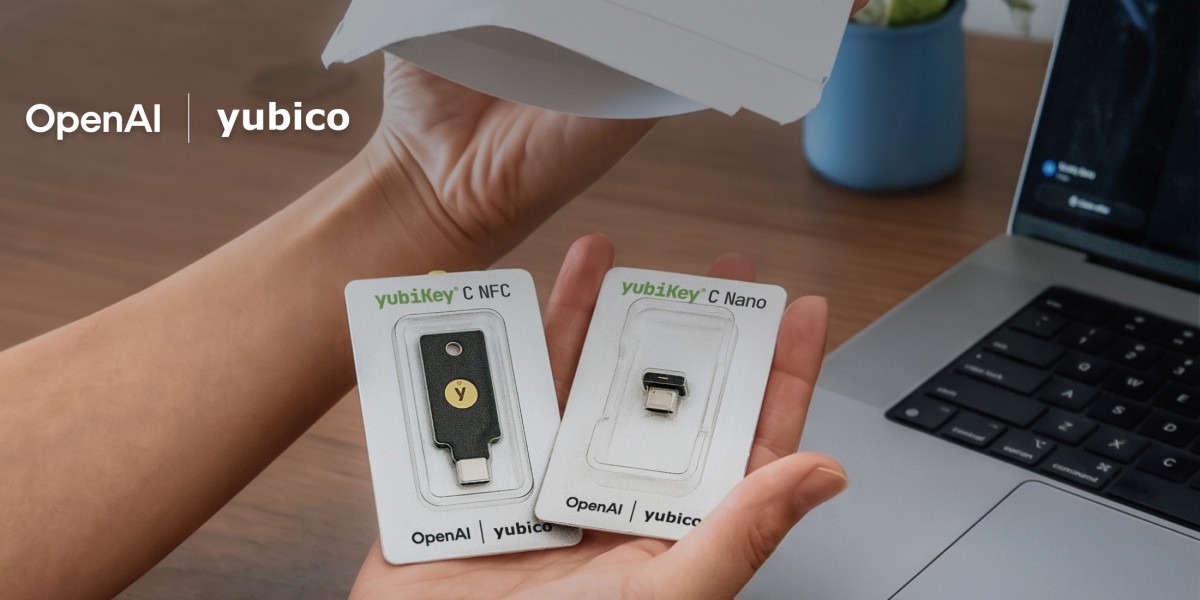
OpenAI has introduced a new tier of account protection designed to safeguard sensitive data from increasingly sophisticated cyber threats. On Thursday, the company launched Advanced Account Security (AAS), an opt-in service that pairs software protections with hardware security keys. This move marks a significant shift toward prioritizing user privacy and data integrity, particularly for high-risk users.
Strengthening Defenses Against Phishing
The core of this initiative is a strategic partnership with Yubico, a leading provider of digital security hardware. Together, the two companies are releasing co-branded security keys—the YubiKey C NFC and the YubiKey C Nano —specifically designed to integrate seamlessly with ChatGPT accounts.
These physical devices serve as a robust defense against phishing attacks, which remain one of the most prevalent methods for unauthorized account access. Unlike traditional passwords or even standard two-factor authentication codes, which can be intercepted or guessed, these security keys use unique cryptographic identifiers. This means that only the person physically possessing the key can log into the associated account, effectively neutralizing remote hacking attempts.
Who Needs This Level of Protection?
While the service is available to any user, OpenAI has highlighted specific groups that would benefit most from AAS:
- Political Dissidents and Journalists: Individuals working in hostile environments where digital surveillance or account compromise could have severe real-world consequences.
- Researchers and Elected Officials: Professionals handling sensitive, non-public information.
- Enterprise Users: Companies storing proprietary strategies or confidential data within their chat sessions.
“Ultimately, our intent is to drastically reduce the threat of unauthorized access to sensitive data in OpenAI accounts worldwide,” said Jerrod Chong, CEO of Yubico.
The Rising Threat to AI Conversations
The urgency behind this launch stems from a growing trend in cybercrime. As AI chatbots become integral to both personal and professional workflows, they have become prime targets for extortion. Cybercriminals are increasingly targeting chatbot accounts because the conversations often contain intimate details, confidential business strategies, or private correspondence.
This focus on security reflects a broader industry shift. Competitors like Anthropic have recently introduced cybersecurity-focused models, such as Mythos, signaling that digital defense is becoming a core component of AI product development. OpenAI’s move to partner with Yubico follows its own recent announcement of a new framework for digital defense, indicating a coordinated effort to secure its ecosystem.
The Tradeoff: Security vs. Accessibility
Users should be aware that heightened security comes with strict limitations. Because the security keys are the sole method of authentication for AAS-enabled accounts, OpenAI cannot assist with account recovery if the key is lost.
This creates a critical tradeoff: while the risk of unauthorized access is minimized, the risk of permanent data loss increases. If a user loses their physical key, they will be locked out of their account, and all conversation history stored within it may be inaccessible forever. This underscores the importance of backing up important data and securely storing hardware keys.
Conclusion
OpenAI’s Advanced Account Security represents a necessary evolution in AI user protection, addressing the specific vulnerabilities of chat-based interactions. By combining software safeguards with hardware-based authentication, OpenAI and Yubico are setting a new standard for account integrity, though users must balance this enhanced security against the permanent risk of lockout.