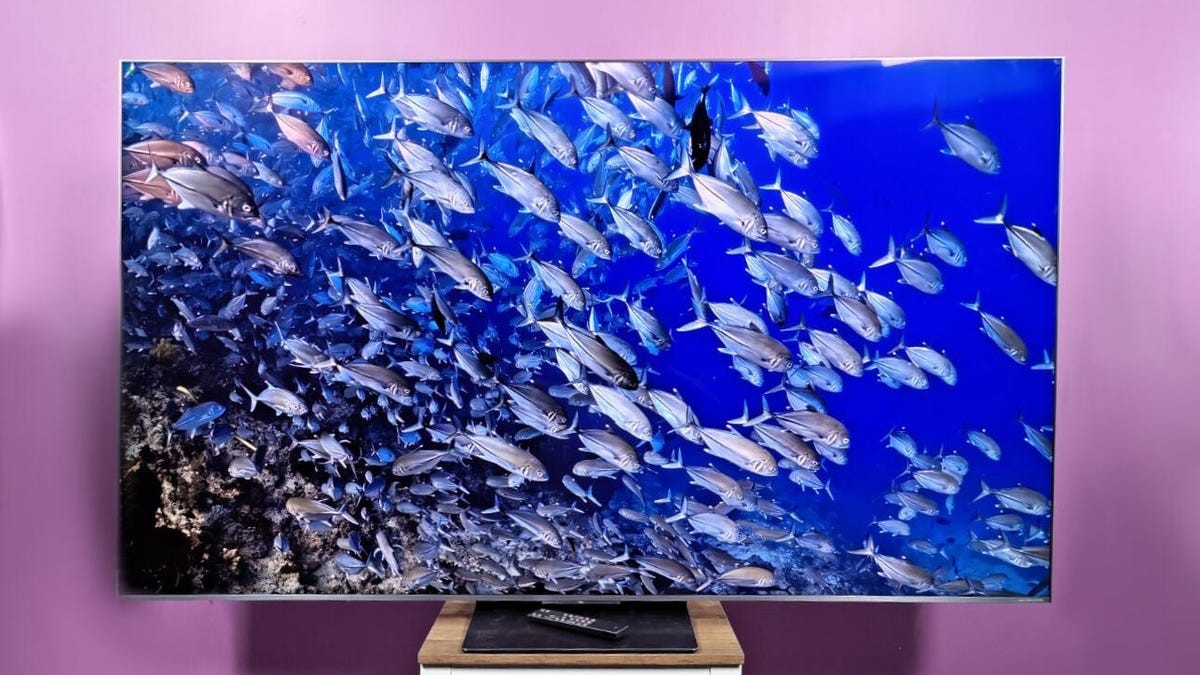
Every TV maker in 2026 is obsessed with squeezing extra colors out of our content. They call it Micro RGB. Red, green, blue LEDs behind the screen. Flashy stuff.
TCL doesn’t want that conversation. Not today. They are pushing their own flavor called Super Quantum Dots. Or as they brand it, SQD-Mini LED.
I have tested most major screens released this year. It’s been a letdown. Most didn’t improve over last year. Some even regressed. The LG G6 and Samsung S985H? Steps backwards. Small, annoying ones.
Then there is the TCL QM8L.
It is demonstrably better. For an LED panel. The picture quality is sharp again. The brightness is absurd. If you have money and hate OLED’s fragility, this is the move.
Price and Size Reality Check
Right now the 75-inch model costs just $200 more the 65-inch one. Buy the big screen if your wall can handle it.
Here is the catch though. If an OLED is on sale and priced close to this TV? Grab the OLED. Always.
Available sizes:
– 65 inches
– 75 inches
– 85 inches
– 98 inches
I tested the 75-incher. The others behave the same way.
Another Black Box?
Yes. It is another black rectangle.
I tested six top-tier 2026 sets side-by-side. It was hard to tell them apart. You had to step inches away from the bezel to spot the logo. Samsung tried a silver bezel trick with the S95H. It looks pretentious.
TCL went for a Zero Border look. Clean. Minimal. But it does nothing to distinguish the product visually. You pick this TV for what’s inside, not the outside.
It sits on a silver pedestal stand. Nothing fancy. Just functional. The remote is heavy, silver, and features a dedicated mic button for voice commands. Useless? Maybe. There it is.
Why This One Wins
Hisense and TCL usually trade blows on price and specs. In 2025 it was neck-and-neck. Now? Hisense chases Micro RGB trends. TCL stays true to its QLED roots.
Smart move.
The QM8L uses two key tricks.
1. SQD-Mini LED with a mini-LED backlight.
2. Super Quantum Dots for color.
3. Halo Control to stop that ugly glow around bright objects on dark screens.
Full-array local dimming is standard here. The TV dims and brightens sections independently. Contrast goes up. Quality improves.
Interestingly the QM8L cuts down on dimming zones compared to the previous model. From 5,000 zones to 4,000+ ones.
Why?
Probably to hit higher brightness peaks. They claim 5,000 nit capability. I doubt anyone sees the missing dimming zones in actual content. I couldn’t even tell myself when sitting side-by-side.
Specs:
– Dolby Vision IQ with room sensor
– HDR10 Plus / HLG / Dolby Atmos
– HDMI 2.1 with 144Hz refresh
– Variable refresh rate (VRR)
– Filmmaker Mode included. Use it. Stop messing with settings.
The speakers are by Bang & Olufsen. Dolby Atmos ready. It connects via Dolby FlexConnect. LG users rejoice: no compatible soundbars yet. You need a TCL or Sony setup for the best effect.
Connections:
– RF Input (ATSC 3.0 ready)
– Ethernet
– 2x USB 2.0
– 1x USB 3.0
– 4x HDMI (one eARC)
– Optical Audio
Gemini Gets Involved
Roku development is in-house for its own TV range. For TCL it is all Google TV.
It works. Well actually it’s pretty zippy. Content suggestions land right where Fire TV does. Shortcuts to apps are easy to set.
The new twist is Gemini. The assistant integrates with your Nest smart home. Ask the remote questions. Check security cams on the Home screen. Unlike the Samsung set the TCL doesn’t listen constantly. You press the button. Good privacy design.
The interface feels responsive. It beats the newer Roku interface. Still prefer Google’s layout? I do. You can always plug in an Apple TV box later if you hate it. Most people won’t bother.
The Showdown
I watched the same episodes on the Sony Bravia 9 II, the QM8L and two Hisense sets (the UR8 and the U7).
The verdict? The TCL held its own against the Sony. Half the price too. Sony wins on raw contrast but it costs a fortune.
Let’s break it down.
Squid Game:
The dingy street scenes? The UR8 turned sickly green. The U7 was bright but washed out. The TCL and Sony matched closely. Accurate. Dark. Right.
All Quiet on the Western Front:
Foxes in a den shot. This is a nightmare for TV screens. Shadows everywhere.
– TCL: Good shadow depth. Balanced color.
– Hisense U7: Brighter shadows but lost some texture.
– Hisense UR8: Shown faces clearest.
– Sony: Also very strong here.
Test Patterns:
Using a Spears & Munsil disc the TCL held white details on snow better than expected. Sunsets stayed warm orange.
Comparing it to an LG C6 (OLED):
You can still see TCL’s LED limitations. Minor haloing exists on bright text over black backgrounds. Much less than Hisense but still there. That is the trade-off for brightness.
Brightness: It Hurts
The QM8L is blinding.
Claimed 5,000nits? It hit 4,240 in testing. Ridiculous. I literally leaned back when a pure white square popped up on the test pattern. It’s not comfortable. It’s aggressive.
Great for game rooms with windows open. Terrible if you don’t control your lights.
The anti-glare coating is weak though. Ranked last among tested TVs. It has a sheen that reflects your room like a mirror. If you watch near a window pull the curtains. The two Hisense sets and the Samsung R95 handle reflections better.
Gaming Perks
This is where the brightness matters.
Playing Xbox Series X or PlayStation 5 titles the TCL looks alive. Colors pop in sunlight.
Input lag dropped to 9.9 milliseconds.
Previous generation was 4 milliseconds. Wait. Did it get slower? The article says improved lag scores.
Let’s be real though. Every millisecond counts for competitive shooters. This is fast enough. Good enough.
The Color Math
Red is often undersaturated on LED sets. Skin tones suffer.
The QM8L got red right in HDR modes. But look at the numbers.
– LG G6 : 83% BT.2020 coverage.
– TCL QM8L : 77% BT.202 coverage in Filmmaker Mode.
Should you panic?
No. Only birds of prey see that gap. Human eyes can’t differentiate at casual viewing distances. Most of your content is still standard SDR anyway. Don’t stress the missing colors. You are fine.
The world moves forward but 4K DVD streams and regular streams don’t need the full spectrum. Enjoy the show instead of obsessing over stats.
That said… maybe next year they’ll fix the green tint.