

Crypto jargon feels like a different language. You read a headline, scan a whitepaper, or scroll through a forum, and suddenly you’re staring at words that mean absolutely nothing. Token. Wallet. EXW. The sentences break down. The syntax fails.
Getting lost is normal. You are not alone in this. But understanding the basics is the only way to stop guessing and start knowing. We need to strip away the noise. We need to look at the mechanics.
This isn’t about getting rich quick. It’s about clarity. Specifically, let’s look at the EXW Token. This project launched in August 2019. It serves as a concrete example of how the ecosystem actually works. By examining this specific asset, we can untangle the web of definitions. We can answer the big question: How do people actually make money with cryptocurrency?
What Exactly Is a Token?
People confuse coins and tokens constantly. Bitcoin is a coin. It has its own blockchain. A token is different. It lives on top of an existing blockchain. It relies on the network’s security. It doesn’t run its own ledger.
Think of it like an app on your phone. The phone is the blockchain. The app is the token. The app needs the phone to function. It can’t exist independently.
Why does this distinction matter? Because most new projects launch as tokens. They are faster to create. They are cheaper to deploy. Ethereum is the most common host for these tokens. That is where EXW fits in.
Wallets: Where Your Digital Money Lives
You cannot buy a token without a place to put it. Enter the wallet. This is not a physical object. It is a software tool. Sometimes it is a website. Sometimes it is a mobile app. Sometimes it is a hardware device you keep in a safe.
The wallet holds your private keys. These keys are cryptographic proofs that you own the assets. Without the keys, the tokens are just numbers in a database. With them, you control the value.
This is why security is paramount. If you lose your private keys, you lose your funds. Forever. There is no customer service to call. No password reset. The blockchain is immutable. It remembers everything. It forgives nothing.
Who or What Is EXW?
The acronym EXW stands for Exaworld. It is a platform focused on virtual world creation and management. The EXW Token is the native currency of this ecosystem. It was officially launched in August 2019.
The project aims to blend virtual reality with blockchain technology. Users can create environments. They can trade assets within those environments. The token facilitates these transactions. It acts as the medium of exchange.
But it is more than just a currency. It is a utility. You need the token to participate in the network. To build. To buy. To sell. To earn.
How Do You Actually Earn Money?
This is the part everyone cares about. How does the EXW Token generate value? How do users profit? The model is not simple speculation. It is built on activity.
- Creation and Development. Users can design virtual spaces. If those
The core premise is simple but disruptive: remove the state from the transaction. Cryptocurrencies don’t just tweak the financial system; they bypass its foundational structures entirely. They function as a standalone economic sector, operating independently of traditional banking oversight.
Ownership isn’t proven by a bank statement. It’s cryptographic. If you hold the private key and possess a balance signed cryptographically on a blockchain, you prove you own the asset. But here’s the catch: the currency has no intrinsic value. Gold has utility. Bitcoin doesn’t. Its worth is purely social consensus. It only matters if the next person in line agrees to accept it as payment for goods or services.
Wallets vs. Coins: The Digital Analogy
Think of a wallet—often called a cyberwallet—as the app that manages your crypto assets. It’s not just a storage locker. It’s an active tool. You use it to store balances, initiate payments, and unlock deals from internet partners offering digital or physical goods.
Coins are the actual currency stored inside. The term translates to “coin,” like a physical metal piece. But digitally, they’re just encrypted records of ownership kept in the wallet.
Bitcoin (BTC): The Original Peer-to-Peer Experiment
Bitcoin wasn’t just the first; it was the blueprint. Created in 2008 and launched in 2009, it runs on a peer-to-peer network powered by blockchain technology. The creator, Satoshi Nakamoto, remains a ghost. No one knows who they are. It’s a pseudonym that has never been traced to a real person.
The mechanics are elegant in their simplicity. Payments are encrypted and digital. Every transaction is logged in a blockchain—a distributed, tamper-proof digital ledger. It’s like a public cash register that everyone can see, but no one can edit.
Price action tells a different story. When BTC hit the market in 2009, it stalled near $100. By 2013, it had multiplied sixfold. In 2017, it surged ten times higher. As of November 2019, the price hovered around $7,500 per coin. The volatility is extreme. The potential for gain is real. The risk is higher.
Ethereum (ETH): Beyond Simple Payments
While Bitcoin focuses on being digital gold, Ethereum introduced something more complex: smart contracts. These are self-executing contracts with the terms directly written into code. They allow developers to build decentralized applications (dApps) on top of the Ethereum blockchain.
Ether (ETH) is the native cryptocurrency of the Ethereum network. It’s used to pay for transaction fees and computational services. Unlike Bitcoin, which primarily tracks value transfer, Ethereum tracks computation and contract execution.
This distinction matters. Bitcoin is a ledger. Ethereum is a platform. Developers use ETH to run code on the network. Users use ETH to interact with dApps. The ecosystem has grown exponentially since its 2015 launch, creating a whole new category of digital assets known as tokens.
Why This Shift Matters for Everyday Users
You might wonder why this technical shift impacts your daily life. It’s not just about trading. It’s about access. Traditional banking requires paperwork, credit checks, and physical locations. Crypto wallets require only an internet connection. This opens financial services to unbanked populations globally.
It also changes how we think about ownership. In a traditional system, the bank holds your money. In a crypto system, you hold your key. If you lose your key, your money is gone. No customer service hotline can help. This control comes with a steep learning curve. Security best practices are non-negotiable.
The technology is still maturing. Regulatory frameworks are catching up. Volatility remains a hurdle for daily use. But the infrastructure is being built. The shift from centralized to decentralized finance isn’t a trend. It’s a structural change. Whether it replaces traditional banking entirely is debatable. But its presence is undeniable.
The next layer involves how these systems scale and interact with real-world assets. Stablecoins, for example, attempt to bridge the gap by pegging
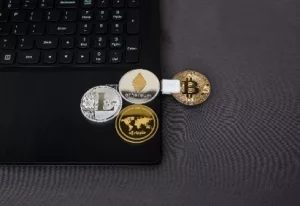
Ethereum isn’t just a currency. It’s a platform. Its real power lies in letting decentralized applications build their own virtual blockchains, manage them, and run logic on top. While Bitcoin moves money, Ethereum moves code.
This ecosystem is fueled by Initial Coin Offerings (ICOs). Startups use these events to raise capital for business models rooted in cryptocurrency or blockchain technology. But the fuel isn’t just hype. It’s Ether (ETH).
Ether serves as the payment method. You spend it to process transactions. This brings us to the core innovation: smart contracts.
These aren’t legal documents. They’re self-executing code. They are “smart” because they fulfill themselves. Once predefined if-then conditions are met, the contract triggers automatically. No middleman. No waiting.
A typical condition? Pay a specific amount of ETH. Once the payment hits the network, the contract executes. The logic is hard-coded. The result is deterministic.
The Volatility of the Ether Economy
The business is booming. Daily, Ethereum processes roughly half a million business transactions. That’s a lot of logic running in parallel.
But the price? That’s a rollercoaster.
ETH started near $1. It hit a peak of $1,386 in January 2018. Today, it hovers around $152. This is high volatility. For investors, it requires nerves of steel. For experienced traders, it’s a playground of opportunity.
The gap between the $1,386 high and the current ~$152 level isn’t just noise. It reflects the market’s struggle to price a utility token that powers an entire computing layer. You aren’t just buying a coin. You’re buying gas for a global computer.
Why does this matter for you? Because the value of the network depends on the demand for computation. More apps mean more ETH burned or spent. Less demand means the token drifts.
The smart contract model changes how we think about trust. We don’t trust the counterparty. We trust the code. And the code only runs if we pay for the execution. That’s the new economy.
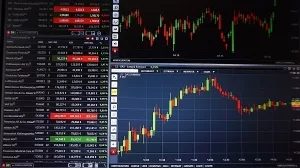
The EXW-Token isn’t just a coin; it is an ERC20 asset built on the Ethereum blockchain. This distinction matters. While users often call it EXW-Coin because it behaves like one, the underlying tech is a smart contract. That code dictates the rules. It allows the token to function similarly to ETH, enabling transfers, storage, and complex interactions within the Ethereum ecosystem.
What Exactly Is an EXW-Token?
Technically, a token and a coin have different origins. A coin runs on its own native blockchain. A token rides on top of an existing one. EXW rides on Ethereum. This makes it an ERC20 token. The smart contract governs its behavior. It defines supply, transferability, and permissions.
But for the average user, the difference blurs. You can send EXW to another wallet. You can receive it. You can hold it. The utility is comparable to native cryptocurrencies. If you hold an EXW-Wallet, you aren’t locked into the EXW ecosystem alone. That wallet typically supports other major assets like Bitcoin (BTC) and Ethereum (ETH).
This interoperability is key. It means you can buy, swap, or send these assets from a single interface. You can also use them to pay for products or support projects integrated into the EXW network. The wallet acts as a gateway. It bridges the gap between traditional crypto holdings and the specific utility of the EXW ecosystem.
Real-World Use Cases Beyond Trading
Speculation is loud. But utility is louder. The developers behind EXW have pushed toward tangible application. In mid-2020, they announced a physical credit card.
Why does this matter? It moves crypto from digital speculation to everyday commerce. The card allows users to spend EXW tokens at merchant partners. It also enables payments outside that immediate circle. You can swipe it for groceries. You can buy coffee. You can pay for services. It transforms a digital token into spendable cash. This is the holy grail for adoption. Usability beats complexity every time.
How Do People Actually Make Money with Crypto?
This is the question everyone asks. How does the model turn value into profit? Let’s look at the mechanics, using the EXW ecosystem as a case study.
When you buy EXW-Coins, you give capital to the issuing company. That capital doesn’t just sit idle. The company deploys it. They make trades. They engage in market operations. Revenue streams are diversified.
- Trading Fees: The company charges fees for exchanging cryptocurrencies. This is a steady income stream.
- Active Trading: The firm uses client funds to trade digital assets. They buy low. They sell high.
- Asset Management: They deal in digital assets and invest in insurance funds.
Here is the critical part. Profits generated from these trades are distributed to the EXW community. Users earn a share of the gains. This is the value proposition. You aren’t just holding a token; you are participating in a revenue-sharing model. The company trades the capital. You reap the rewards. It creates a direct link between the platform’s performance and the holder’s wallet.
The Risk: Why You Must Do Your Homework
This model sounds appealing. Easy money. Just buy and wait. But that mindset is how people lose everything.
If you are new to this space, do not skip the basics. Information is your only shield. Look for neutral, authoritative sources. The German Federal Ministry for Economic Affairs and Energy, for example, publishes detailed reports on blockchain strategy and token economics. They provide a regulatory framework. Understanding that framework is non-negotiable.
You also need to understand the tech. Read about Blockchain technology. Understand Bitcoin fundamentals. Know how wallets work. Know what a smart contract is. If you cannot explain it, you shouldn’t invest in it.
The Bottom Line
Crypto offers a new financial layer. It offers speed. It offers transparency. It offers participation in profit models like the EXW revenue share. But it also offers risk. Volatility is real. Regulation is evolving.
Start small. Learn more. The technology is advancing rapidly. The opportunities are real. But they are not free. They require knowledge. And in this market, knowledge is the only currency that never depreciates.
Where do you go from here? The ecosystem expands. New tools emerge. The lines between traditional finance and decentralized assets continue to blur. The only constant is change. Are you ready for it?