Tesla is preparing for a massive financial shift. During its first-quarter earnings call, CEO Elon Musk revealed that the company’s capital expenditure (capex) is projected to hit $25 billion in 2026. This represents a dramatic escalation in spending compared to recent years, signaling Tesla’s aggressive transition from a traditional electric vehicle (EV) manufacturer to a leader in artificial intelligence and robotics.
A Massive Leap in Spending
To understand the scale of this move, one must look at Tesla’s recent spending trajectory. The planned $25 billion for 2026 is nearly triple what the company spent in previous years:
- 2023: $8.9 billion
- 2024: $11.3 billion
- 2025 (Projected): $8.5 billion
- 2026 (Projected): $25 billion
While Tesla had previously signaled an increase to over $20 billion, this additional $5 billion uptick suggests that the requirements for its next phase of growth—specifically in compute infrastructure and data centers—are even more capital-intensive than initially anticipated.
Where the Money is Going
This isn’t just about building more cars. Tesla is reallocating its resources toward a high-tech ecosystem designed to create new, long-term revenue streams. The primary areas of investment include:
🤖 AI and Robotics
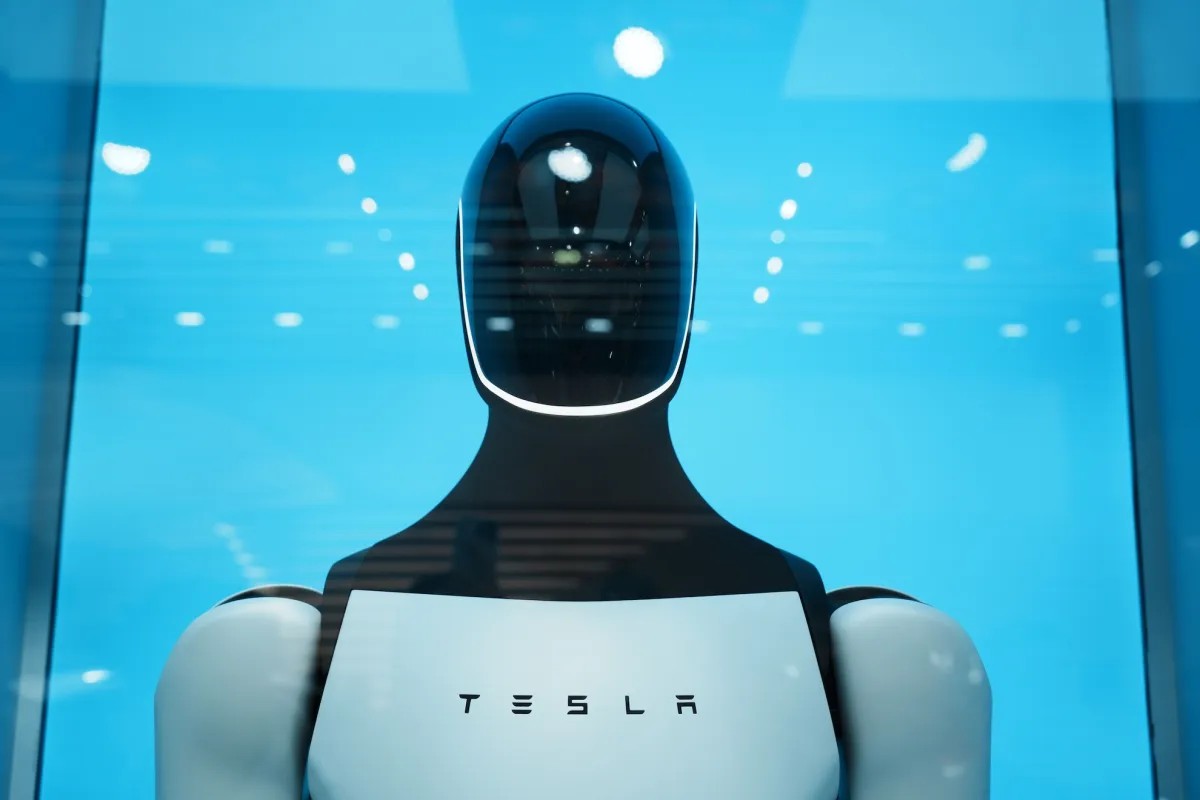
A significant portion of the budget is earmarked for AI training, chip design, and semiconductor research. This includes the development of a new semiconductor research fab in Austin, Texas. Furthermore, Tesla is preparing for the mass production of Optimus, its humanoid robot. The company has already cleared land outside its Austin factory for a dedicated Optimus manufacturing facility.
🚕 Autonomous Future
The capital will also fund the development of Robotaxi operations and the software required to make autonomous driving a reality.
🔋 Infrastructure and Supply Chain
Tesla intends to strengthen its supply chain “across the board,” focusing on:
– Battery technology and energy storage.
– AI silicon (custom chips).
– Manufacturing expansion to support next-generation production lines.
The Financial Trade-off: Growth vs. Cash Flow
This aggressive investment strategy comes with a significant financial risk. While Tesla ended the first quarter with a healthy $44.7 billion in cash and short-term investments, the sheer volume of spending will impact the company’s immediate liquidity.
CFO Vaibhav Taneja warned that Tesla is expected to enter negative free cash flow territory for the remainder of the year. This news caused Tesla’s shares to erase early gains in after-hours trading, as investors weighed the long-term potential of AI against the short-term reality of dwindling cash reserves.
The Broader Tech Context
Tesla is not alone in this “arms race.” The company’s spending reflects a wider trend among tech giants racing to dominate the AI era. For comparison:
– Amazon is projected to spend $200 billion in 2026 on AI, chips, and robotics.
– Google is expected to spend between $175 billion and $185 billion in 2026.
Tesla is essentially attempting to pivot its entire business model to keep pace with these industry titans, moving away from the commoditized EV market and toward high-margin autonomous and robotic technologies.
“We believe this is the right strategy to position the company for the next era,” stated CFO Vaibhav Taneja, acknowledging the temporary financial strain in exchange for future dominance.
Conclusion
Tesla is undergoing a fundamental transformation, sacrificing short-term cash flow to fund a massive, multi-year bet on AI and robotics. Whether this $25 billion investment successfully builds the “next era” of revenue or creates a period of prolonged financial instability remains the central question for the company’s future.