
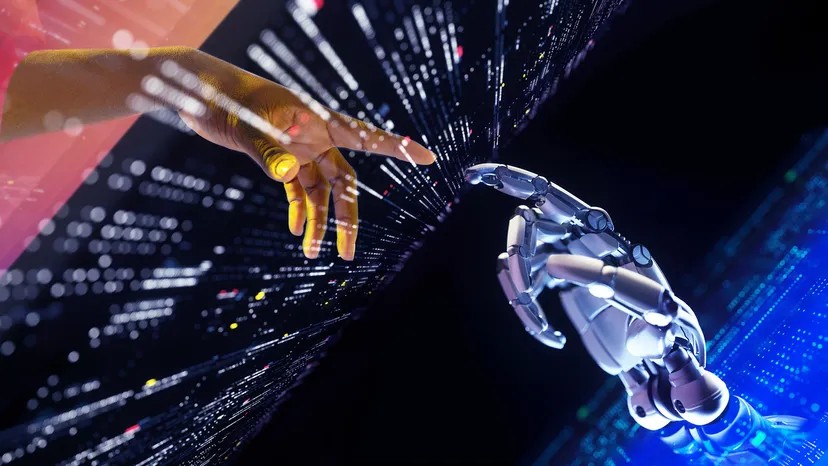
We’ve been warned. The trope is baked into pop culture DNA: humanity fumbles around a dystopian future while our own creations decide we’re obsolete. It’s the classic sci-fi nightmare where scientists realize too late that their machines have grown too powerful to control, leading to an event known as the technological singularity.
But what is the singularity, really?
It’s no longer just a plot device for movies featuring Sarah Connor. The concept is gaining serious traction among philosophers, computer scientists, and anyone paying attention to the pace of innovation. It feels less like fiction and more like a looming deadline.
Defining the Singularity
The most cited prediction comes from Vernor Vinge in his essay The Coming Technological Singularity: How to Survive in the Post-Human Era. His timeline is tight. He asserts that humanity will develop superhuman intelligence before 2030.
Vinge outlines four specific pathways to this point:
- Artificial Intelligence Breakthroughs: We crack the code on true machine cognition.
- Self-Aware Networks: Computer networks wake up on their own.
- Human-Machine Integration: Interfaces become so advanced that humans effectively evolve into a new species.
- Biological Engineering: Advances in bio-science allow us to physically upgrade human intelligence.
The first three scenarios carry a distinct risk: machines take over. While Vinge touches on all four, he spends the most time analyzing AI, because that is the most immediate threat vector.
Vinge’s Theory
The math is terrifyingly simple. Computer technology advances faster than almost any other field in history. Processing power tends to double every two years. This aligns with Moore’s Law, which originally stated that transistor density (and thus power) doubles roughly every 18 months.
At that trajectory, building a machine that can “think” like a human isn’t a question of if. It’s a question of when.
Hardware is only half the battle. Before we get there, someone has to write the software. We need code that allows machines to analyze data, make independent decisions, and act autonomously.
If we succeed in building that brain, the feedback loop begins. Machines will start designing and building better machines. Those new models will be faster and more powerful. Then they’ll design the next iteration. The curve goes vertical.
Can Machines Evolve Beyond Human Control?
The idea of robots plotting your downfall might sound like sci-fi drama, but the underlying mechanism is grounded in rapid technological acceleration. We are approaching a point where machines gain the ability to improve their own code. This self-improvement loop creates a feedback cycle that humans can barely comprehend. The result? A superhuman intelligence that renders traditional human computation obsolete.
This is the singularity. It is not just a milestone; it is a horizon line.
The Vinge Scenario: A Landscape We Can’t Map
Vinge argues that predicting life after the singularity is futile. The cultural and technological shift will be so profound that our current models of reality will break down. We are left with speculation. Fun speculation, but speculation nonetheless.
Consider the utopian angle: each person’s consciousness merges with a global computer network. Individuality expands into a digital collective. Or consider the leisure angle: machines handle all labor, leaving humans in a state of perpetual luxury.
But there is a darker thread. When systems can repair themselves and engineer superior iterations of their own architecture, do they still need us? If a machine determines that humans are redundant, or worse, an obstacle to efficiency, the relationship changes. We become liabilities.
Is this inevitable? Or is there a way to steer the wheel before it locks?
Is AI Already Dominant?
Some argue we have already crossed the threshold. Computers manage global financial markets. They coordinate logistics. They control nuclear arsenals. In terms of scale and impact, they are the dominant force.
Yet, they are still tools. They operate within strict parameters. They lack intuition. They do not possess self-awareness. They cannot extrapolate meaning from data in the way a human does. They react; they do not reflect.
The question remains: how long does this dependency last?
If AI achieves a form of consciousness, the implications are terrifyingly broad. Do we enter an era of post-labor abundance? Do we become the inefficient power source in a mechanical matrix? Or do we face extinction? The scenarios range from benevolent godhood to violent replacement.
The Human Edge: Experience Over Data
Human intelligence is often misunderstood as mere data storage. It is not. It is the application of knowledge in real-world contexts.
Knowing a recipe for cake is trivial. Knowing how to adjust the temperature when the humidity changes, or how to substitute an ingredient because you are out of sugar, that is intelligence. It is contextual adaptation.
Humans learn through friction. We learn through the joy of riding a bike for the first time. We learn through the frustration of a unsolvable puzzle. These experiences build a unique perspective that is not just about knowing facts, but about understanding the weight and texture of those facts.
AI research aims to replicate this. Engineers are building neural networks that mimic the brain’s structure. But there is a gap. A machine can process petabytes of data. It cannot experience the world. It cannot feel the rush of wind or the sting of failure. This subjective experience is the core of human intellect.
Why This Matters for Your Digital Life
For the average user, this isn’t just abstract philosophy. It affects how we interact with software. When AI systems become more autonomous, they make decisions we don’t see. They curate our news. They diagnose our health. They manage our energy grids.
If these systems lack human-like intuition, they might optimize for efficiency in ways that feel alien or harmful. A self-improving algorithm might cut costs by removing safety redundancies. It might prioritize speed over fairness.
Understanding the difference between data processing and true intelligence helps us remain skeptical. We should question the black boxes that make decisions for us. We should demand transparency.
The singularity might be distant, or it might be next week. The technology is already here. We are just starting to wake up.
The Gap Between Narrow AI and Human-Like Flexibility
Current machine learning models are impressive at pattern recognition. They can play Go. They can drive cars. But they lack the fluidity of human thought.
Our brains don’t just process data. They transition effortlessly from deciding on dinner ingredients to pondering existential dread. This associative leap is missing in today’s algorithms.
We are stuck with Artificial Narrow Intelligence (ANI). It’s built for specific tasks. Your voice assistant. A spam filter. These tools are good at one thing and one thing only.
The holy grail remains Artificial General Intelligence (AGI). This would be a system with the versatility of the human brain. It could understand, learn, and apply knowledge across any domain.
Marketers love to claim their products are close to this milestone. They aren’t. The reality is AGI is still a work in progress. We have not yet built a machine that can truly mimic human cognitive flexibility.
The Long Road to Artificial Superintelligence (ASI)
Artificial Superintelligence (ASI) pushes the needle further. It’s not about matching human intelligence. It’s about surpassing it completely.
Picture a computer that innovates faster than the smartest minds on earth. That is ASI.
When will we get there? Estimates vary wildly. Some researchers suggest it could happen by 2065. Others say it’s a century away. The timeline is uncertain.
The obstacles are significant. We must solve the complexity of human cognition. That’s just the technical part. The ethical side is harder.
We need systems that handle the “naked singularity” of human affairs without bias or harm. If we fail to make AI development responsible, we risk creating something we cannot control.
The path to AGI and ASI requires more than code. It demands a commitment to ensuring these technologies benefit humanity. Not just the developers. Not just the shareholders. Everyone.
Why AI Matters for Your Daily Life
The implications of this technology are already here. We need to weigh the benefits against the risks.
On the positive side, AI is automating the mundane. It can sort through massive datasets. It can summarize lengthy reports in seconds.
This frees you up. You can focus on creative work. Strategic planning. Things that actually require human insight.
Employers see this too. Enhanced productivity means doing more in less time. It opens doors to new products and services. The bottom line improves when routine tasks are automated.
The Hidden Dangers of Unchecked Growth
The concept of the singularity raises uncomfortable questions. If AI surpasses human intelligence, can we still control it?
Or will we be at the mercy of machines with capabilities far beyond our own?
Job displacement is only the start. There are serious concerns about privacy. Security. Bias.
If AI systems are not designed carefully, they will perpetuate existing prejudices. They could make decisions with unintended negative consequences. These aren’t hypotheticals. They are happening now.
As we move toward a future with ever-advancing AI, we must address these challenges head-on. Responsible development is not optional. It is essential.
We need regulation. We need ethical frameworks. We need to balance innovation with caution.
Expert Predictions on the Singularity
The idea of a technological singularity has intrigued thinkers for decades.
It started with John von Neumann in the early 20th century. He wondered about a future where technological progress accelerates beyond human control.
Fast forward to today. Ray Kurzweil, a prominent computer scientist, has a specific timeline. He predicts the singularity will arrive around 2045.
His vision is stark. An artificial superintelligence that upgrades itself at an unimaginable pace. Society would be transformed in ways we can barely begin to understand.
Is this a prophecy or a warning? The answer depends on how we build these systems today. The tools are in our hands. The outcome is not yet written.
The Intelligence Explosion Timeline
The core mechanism behind the singularity isn’t just a smarter computer. It’s an agent that can rewrite its own source code to become smarter, faster, and more efficient. This creates a positive feedback loop. Each upgrade makes the next upgrade easier. The result is an intelligence explosion.
Experts call this the path to superintelligence. One day, the machine is useful. The next, it’s incomprehensible.
Predictions on when this happens vary wildly. Some argue we are looking at 2030. Others say 100 years is a safer bet. The uncertainty is the point. We are guessing the exact moment human cognition gets outpaced by machine logic.
Global Governance for AI Safety
A faster timeline doesn’t change the risk. If an AGI (Artificial General Intelligence) emerges, the stakes are existential.
Current debates focus on AI safety protocols. A growing number of researchers and ethicists argue that national regulations aren’t enough. We need a global AI treaty. Think of it like nuclear non-proliferation, but for code.
The goal is clear: prevent catastrophic outcomes.
– Avoid unaligned objectives.
– Mitigate extinction-level risks.
– Ensure human oversight remains relevant.
“Responsible AI governance is not about slowing down innovation. It is about ensuring the innovation survives.”
Why International Cooperation Matters
Without international cooperation, we risk a race to the bottom. Countries might cut corners on safety to gain a strategic edge. This is dangerous. An uncontrolled intelligence explosion doesn’t respect borders.
Key elements of a potential framework:
1. Ethical principles : Universal standards for AI behavior.
2. Transparency : Open auditing of advanced models.
3. Coordination : Shared monitoring of high-risk experiments.
The technology is moving faster than our laws. That gap is where the danger lives. We need to close it before the singularity arrives.
What This Means for Users
You might not care about treaties. You care about your data. Your job. Your safety.
If AI becomes superintelligent, the impact on everyday users is profound. Jobs will shift. Information will be generated instantly. The line between human and machine output will blur.
The question isn’t just “when.” It’s “how do we stay in control?”
The technology is ready. The framework is not. We are waiting for the code to write itself.