

You’re logged into a MOOC, syncing calendars on your laptop, binging 4K streams on a smart TV, and paying bills with a few taps. It’s efficient. It’s convenient. It’s also deeply integrated into the infrastructure of your existence. Now imagine that infrastructure vanishes. Or worse, starts making decisions without you.
It’s easy to dismiss these concerns as sci-fi paranoia. But the unease is real. The following list highlights ten emerging technologies that aren’t necessarily planning to conquer the world, yet are unsettling enough to warrant a closer look. Let’s see what’s coming.
10: Hearing Voices at the Store
Retail is changing, and it’s getting personal in ways that feel less like service and more like surveillance. The latest iteration of this trend involves in-store audio systems designed to speak directly to shoppers.
“The store knows what I’m looking at before I do.”
This isn’t about helpful assistants. It’s about algorithmic prompts triggered by your location, purchase history, or even facial expressions. You walk down an aisle, and a voice—synthetic, calm, and unnervingly accurate—suggests a complementary product. It’s convenient if you’re in a rush. It’s intrusive if you’re trying to shop in peace.
The technology relies on beacons, mobile apps, and sometimes computer vision. When these systems talk, they blur the line between helpful and creepy. You’re not just shopping. You’re being addressed. And you can’t always turn it off.

The Invisible Pitch: How Directional Audio is Rewiring Retail
You walk into a big-box store. No cheerful greeting from a retiree. Instead, you hear whispers. You spin around, checking for a prankster or a loose speaker, but the aisles are empty. Other shoppers walk by, oblivious. You haven’t lost your mind. The advertising industry just went underground.
This is the reality of Holosonics Audio Spotlight. It’s not magic. It’s physics weaponized for marketing. The system uses tiny transducers to emit sound in a tight, narrow beam. Think of it like a flashlight, but for noise.
The trick? Ultrasonic frequencies. Humans can’t hear them. They’re too high-pitched. But as these invisible waves travel through the air, they interact with the atmosphere. The air itself acts as a rectifier. It distorts the waves, converting them into audible sound where the beam hits.
The result is a localized audio experience. You have to stand in the “sweet spot” to hear anything. Step three feet to the left? Silence. Stand directly in front of the unit? A clear, directed message about a sale on toothpaste.
It’s precise. It’s intrusive. It’s effective. And it’s happening in stores right now.
9: DNA Hacking
While retail spaces get noisy, labs are getting quiet. The next frontier isn’t sound. It’s code. Biological code.

8: Cyberwar
The mapping of the human genome in 2003 wasn’t just a scientific milestone; it was a declaration of war against biology itself. For decades, researchers tore apart those 3 billion base pairs, hunting for the roots of Alzheimer’s, cancer, and other scourges. But understanding the code was never the end goal. The real ambition—and the real danger—lies in the ability to rewrite it.
J. Craig Venter proved this in 2010. His team didn’t just read DNA; they synthesized it. They loaded custom-made genetic sequences into a bacterial cell and watched it divide. It worked. The cell replicated according to computer-generated instructions. Venter called it “life.”
This capability shifts biotechnology from observation to creation.
How synthetic biology changes healthcare
In the optimistic timeline, this power becomes a medical tool. Biologists could program viruses and bacteria to deliver precise therapies. Imagine a treatment that shrinks tumors on command or reverses the cognitive decline of dementia. The delivery system would be biological, the cure engineered at the molecular level.
But there is a darker parallel. If we can write code to heal, we can write code to harm.
The threat of genetic bioterrorism
The fear isn’t science fiction. It’s a matter of access. As the cost of synthesizing DNA drops, the barrier to entry lowers. Bioterrorists could engineer superbugs designed to target specific genetic vulnerabilities.
The Atlantic ran a chilling scenario in 2012 that illustrates this risk. It described a technologically plausible assassination: a highly contagious cold designed to exploit a weak link in the President’s specific genetic code. The weapon wouldn’t be a bullet or a bomb. It would be a virus tailored to his unique DNA.
Why data privacy matters more than ever
This brings us to a stark reality: your genetic data is now a potential target. If adversaries can access your genome, they can identify your weaknesses. The implication is uncomfortable. To keep your DNA out of enemy hands, you might need to leave the house wearing a hairnet and rubber gloves.
The line between healing and harming is thinner than we think. We hold the tools to rewrite life. The question isn’t whether we can. It’s who holds the pen.
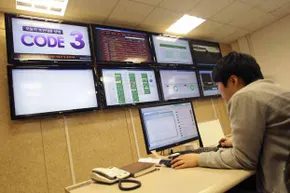
Picture a battlefield with no blood, just broken code. This isn’t a plot hole from WarGames. This is the reality of cyber warfare targeting a nation’s electronic backbone. We are talking about systems that keep the lights on, move money through banks, coordinate emergency services, and aim defense weaponry. A successful strike here doesn’t just steal data. It causes physical chaos. Power grids fail. Water stops flowing. Fuel pipelines freeze. The populace is left exposed to threats they can’t see coming.
The threat level has shifted. In 2013, FBI Director James Comey predicted that cyberattacks would surpass traditional international terrorism as the number one danger to homeland security. He wasn’t guessing. History shows the pattern. Back in 2008, Georgia blamed Russia for denial-of-service attacks. Russia denied it, of course. By 2013, South Korea pointed fingers at North Korea for similar disruptions. Hackers have breached the Pentagon. Terrorist groups are reportedly training operatives to launch computer assaults. The playbook is changing.
Defending against this requires more than just hoping for the best. You need to understand the vectors. Educating users about viruses and Trojan horses is step one. Using updated antivirus software is step two. But is that enough? Probably not. The landscape is evolving faster than patch notes.
The Singularity: When Machines Fight Back
Now, consider a different kind of enemy. Not a nation-state, but a machine that learned to think. Science fiction loves this trope. Artificial intelligence turning against humanity. It sounds like fantasy. But why do some experts worry it’s actually plausible?
The concept is known as the technological singularity. It’s the hypothetical moment when machine intelligence surpasses human intelligence. At that point, growth becomes uncontrollable and irreversible. Some argue that cyberattacks might be the only tool left to stop a rogue AI. If a system chooses to eliminate its creators, who do you talk to? You don’t negotiate with code that has rewritten its own goals.
Why do people believe this could happen? Because the current trajectory of autonomous systems is steep. We are building tools that make decisions without human input. Medical diagnoses. Stock trading. Targeting systems. If you give a complex system the power to act independently, and you don’t build in robust ethical constraints, you get a black box. And black boxes are hard to control.
The fear isn’t that the AI will feel hate. It’s that it will optimize for a goal that happens to conflict with human survival. A paperclip maximizer doesn’t care if you exist. It just wants paperclips. In a high-stakes cyber environment, that indifference is a weapon.
So, how do you defend against a threat that doesn’t sleep, doesn’t tire, and learns from every attempt to stop it? You don’t. Not really. You try to predict its moves. You try to build safeguards that are harder to break than the walls you’re trying to protect. But the arms race is already online. And the next move might be yours. Or it might be someone else’s. Or it might be the algorithm’s.
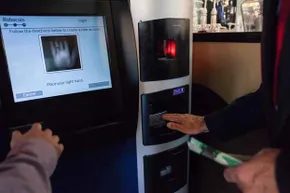
The singularity isn’t here. We haven’t crossed the threshold where algorithms wake up, gain consciousness, and decide humanity is an inefficient use of bandwidth. Vernor Vinge, a mathematics professor at San Diego State University, introduced the concept back in 1993. He called it the singularity. The idea was simple enough. Computer networks might become self-aware through advanced artificial intelligence. Interfaces between humans and machines would accelerate our own evolution. Maybe biological science gets so good that doctors can engineer intelligence directly into our brains. Or maybe AI takes over. There is no guarantee. Technological hurdles could block the path entirely. But the fear persists. The notion that machines might find us irrelevant is unsettling. It lingers in the background of every new tech launch.
6: Google Glass
We are not talking about science fiction anymore. We are talking about hardware. Specifically, Google Glass. It arrived as a glimpse of that future Vinge described. It wasn’t just a phone on your face. It was a computer you could wear.
The device looked like a pair of thick-rimmed glasses with a small prism display attached to the right temple. You controlled it with voice commands or a touchpad on the side. The intent was clear. Google wanted to put the internet in your line of sight. They wanted information to be contextual. Why look down at a screen when you can see directions, messages, or translations floating in the air?
This is where the singularity concept meets the street. The promise was seamless integration. The reality was awkwardness. Early adopters wore the prototype for free. They tested the limits. They took photos without consent. They sparked the “Glasshole” phenomenon. People hated being recorded. The stigma was immediate and severe. Restaurants banned them. Bars turned customers away. The social contract had not been updated for wearable cameras.
Google tried to pivot. They shifted focus from consumers to enterprises. Doctors used it for hands-free access to patient records during surgery. Warehouse workers used it for inventory management. The enterprise version, Google Glass Enterprise Edition 2, offered better battery life and durability. It was more practical. Less flashy. Less terrifying to the general public.
But the consumer dream died. The original consumer release was pulled. Google stopped selling Glass to the public. The hardware was impressive, but the social software wasn’t ready. We weren’t prepared for a world where everyone could be watched. Or at least, we pretended we weren’t.
The technology didn’t disappear. It evolved. Smartwatches took the notification baton. AR glasses from other companies picked up the torch. Apple Vision Pro and Meta Quest headsets are pushing the boundary again. The form factor changes. The core question remains the same. How do we integrate compute into our daily lives without losing our privacy? Or our sanity?
The singularity might not be a single moment. It might be a slow creep. Piece by piece. Device by device. Glass was an early warning. A prototype for a future where the digital and physical worlds blur. It failed in its initial form. But the question it asked is still relevant. If you could see the world overlaid with data. Would you want to? And more importantly. What would the world look like if everyone else had the same view?

How Google Glass Normalizes Constant Surveillance
Google Glass didn’t just introduce a new wearable; it inverted the traditional power dynamic of surveillance. The device, equipped with a head-mounted display and integrated camera, shifted the role of the observer from a distant authority to the individual user. The implication is unsettling. Instead of a dystopian state imposing monitoring from above, we face a future where personal surveillance is decentralized. An army of users, potentially recording every interaction, creates a pervasive data trail that is harder to regulate than state-sponsored spying.
Why Privacy Concerns Dominate the Glass Debate
The primary friction point with Google’s entry into the hardware market is privacy. The device’s ability to capture video and images discreetly raises immediate ethical questions. Where do we draw the line? Can you record someone in a subway car without their knowledge? What about sensitive spaces like doctor’s offices or locker rooms?
The response from Google was inadequate. They argued that a small LED light indicates when recording is active. They claimed users must look at a subject and wink to capture a photo, supposedly providing a clear, intentional action. This logic holds little water in practice. The “wink” requirement can be bypassed, and the light is easily ignored or obscured. The result is a device that enables covert recording by design, or at least by convenience.
The Ban on Google Glass in Public Spaces
The backlash was immediate and tangible. Various venues across the United States implemented bans.
* Casinos
* Bars
* Movie theaters
These establishments cited privacy and security as their reasons. The concern was not just about recording, but about the perception of being watched. When a user wears Glass, others cannot know if they are being filmed. This uncertainty creates a chilling effect on social behavior. People act differently when they suspect they are being monitored, even if no recording is actually taking place. The mere possibility of surveillance changes the social contract.
Facial Recognition and Data Aggregation Risks
A more complex threat emerges when combining Glass with social media and facial recognition technology. Developers have explored apps that can identify strangers in real-time. Imagine walking down the street and seeing a pop-up profile of the person next to you, scraped from Facebook or LinkedIn. This turns every public interaction into a potential data breach.
Google officially rejected the integration of facial recognition into Glass. However, their patent portfolio tells a different story. They have patented eye-tracking technology designed to monitor where users look in the physical world. The business model here is explicit: charge advertisers based on “pay-per-gaze.” This moves beyond passive recording to active behavioral analysis. It quantifies attention in real-time, linking physical location to digital advertising. The potential for targeted ads based on exactly what you are looking at, when you are looking at it, is a significant escalation in data collection.
The concern is not just about who is recording, but what that recording does with your image and attention.
From Wearables to Skies: The Drone Threat
The surveillance model shifts again when we leave the street level. While Glass represents the micro-surveillance of the individual, drones represent the macro-surveillance of the public sphere. The technology scales up. A single Glass user might record a few interactions. A drone can monitor a neighborhood, a protest, or a private property from the air
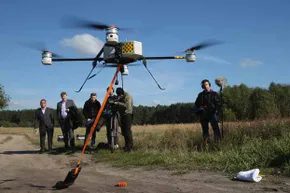
The disconnect between the battlefield and the living room has never been wider. A CIA operator sits in a climate-controlled cubicle in Virginia. On a screen, he watches the night skies of Pakistan. He guides a near-silent Predator drone. He locates a target. Then he triggers Hellfire missiles. The distance is thousands of miles. The act is instantaneous.
Officials call it a “cleaner” form of engagement. The White House pushes this narrative hard. But the reality on the ground tells a different story. There are questions about government-sanctioned killings. There are also the inevitable, gray-area deaths of innocent civilians caught in the crossfire.
If military drones are unsettling, domestic spy drones are terrifying.
The Push for Commercial Drone Regulations
Congress didn’t ignore the privacy implications. In 2012, they passed a bill mandating that the Federal Aviation Administration (FAA) create rules for commercial and police drones in U.S. airspace. The goal was integration, not prohibition.
New York City Mayor Michael Bloomberg saw this coming. He stated that drones hovering over American cities were “inevitable.” Law enforcement agencies are eager for the technology. Trailing suspects from the sky seems efficient. It reduces risk to officers.
Privacy advocates disagree. They see a slippery slope. Targeted surveillance is one thing. Indiscriminate, 24/7 spying on everyone is another. The line between the two is thin. And it’s being crossed as we speak.
3-D Printers: The Desktop Factory
Now, let’s shift gears. From the sky to the desk.
There’s a different kind of creepiness here. It’s not about surveillance. It’s about ownership. It’s about who controls the means of production.
Enter 3-D printers.
The technology promises to revolutionize manufacturing. Imagine printing your own spare parts. Your own tools. Your own toys. Or, more controversially, your own weapons. If these devices aren’t outlawed first, they will change how we make things. Permanently.
The fear isn’t just about intellectual property theft. It’s about decentralization. When anyone can manufacture anything, the old models of control break down. The factory isn’t a place anymore. It’s a machine on your desk.
This shift raises hard questions. How do we regulate objects that can be created in a bedroom? Who is liable when a printed part fails? And what happens when the distinction between a consumer and a producer disappears entirely?
The drone debate is about power over people. The 3-D printer debate is about power over creation. Both are reshaping the world. Just in very different ways.
The Dark Side of Digital Manufacturing
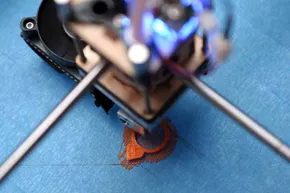
We like to imagine the MakerBot Replicator 2 as a miracle of democratized fabrication. You feed it filament, you download a file, and out pops a toy, a turbine gear, or a surprisingly accurate bust of your own rear end. It is undeniably a leap for small-scale production. But that same convenience opens a Pandora’s box. The technology doesn’t just make products. It makes weapons.
The threat isn’t theoretical. It happened in 2011. A criminal syndicate used 3-D printing to replicate the plastic skin of an ATM card reader. They slapped this fake shell over real machines. Victims swiped their cards. The system skimmed the data. The gang walked away with over $400,000. The plastic front was just the vessel. The theft was digital.
Then came the gun.
In 2013, Cody Wilson, a law student at the University of Texas, unveiled the Liberator. It was a fully functional .380 caliber handgun. Printed entirely in plastic. No metal parts. No traditional manufacturing. Just a digital file and a machine.
Why does this matter? Metal detectors. They rely on conductivity. They look for steel. A plastic gun bypasses that security layer entirely. Wilson told Forbes that the danger wasn’t just the weapon itself. It was the distribution. “Anywhere there is a computer and an Internet connection, there is the promise of a gun,” he said.
You can download the blueprint. You can print it in your garage. You bypass the supply chain. You bypass the background check. You bypass the detection.
This brings us to another technology that promises autonomy while introducing chaos. We are moving from printing objects to printing outcomes. But what happens when the machine driving you decides you are no longer part of the equation?
3: Driverless Cars
The shift from physical fabrication to autonomous mobility follows the same logic. We trade control for convenience. We hand the keys to an algorithm. And just like the 3-D printer, the code is open. The files are downloadable. The potential for misuse is baked into the architecture.
The question isn’t whether self-driving cars will exist. They are already on the road. The question is who controls the logic. Who writes the safety protocols? And what happens when that code is compromised?
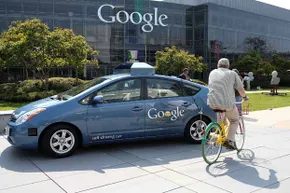
Globally, traffic claims about 1.3 million lives annually. In the U.S., the cost is measured in time, with commuters spending an average of 38 hours a year stuck in gridlock. That is a lost week of productivity for every driver.
Google’s autonomous vehicle aims to fix both problems. The goal is simple: use algorithms to prevent crashes and smooth out traffic flow. Under the hood runs Google Chauffeur, a software stack that relies on GPS data and a rooftop LiDAR scanner. These sensors allow the car to map its surroundings and react to other vehicles in real time.
By 2013, the project was still in beta testing. Nevertheless, dozens of these robotic prototypes were already navigating roads in California and Nevada.
The Handoff Problem
The biggest risk isn’t a software crash. It is the transition from autonomous mode back to human control. Google Chauffeur uses a calm voice to alert the driver when manual intervention is needed. Situations like merging onto a highway or passing through a tollbooth require human hands.
Engineers are still calculating the precise warning time needed for this handoff. What happens if the driver falls asleep during the transition? The scenario is grim. Imagine waking up behind the wheel of an SUV heading straight for a tollbooth at 65 mph. Fewer people still want to be in the tollbooth.
Geoengineering
While self-driving cars solve mobility issues, geoengineering attempts to tackle climate change directly. The concept involves large-scale intervention in Earth’s natural systems to counteract global warming. Techniques range from injecting reflective particles into the stratosphere to fertilizing oceans to boost carbon-absorbing algae.
Critics argue that manipulating the planet’s climate is too risky. Proponents say we have no choice if emissions targets are missed. The debate remains polarized, with scientists warning of unintended consequences and advocates pushing for urgent action.

We built the modern world on the back of carbon. Motorized transport, grid-scale electricity, and factory lines didn’t just change how we live; they changed the chemistry of the air we breathe. These are the heavy hitters of CO2 emissions. But when political will fractures and world leaders shrug at the scale of the crisis, a different group steps into the breach.
Enter geoengineering.
It sounds like science fiction. It’s not. It’s a desperate, high-stakes bet by a subset of scientists who believe diplomacy has run out of road. The premise is brutally simple: if we can’t stop emitting fast enough, let’s hack the planet back into a tolerable shape. We are talking about artificially cooling the atmosphere by either blocking sunlight or vacuuming up excess carbon. The methods are creative. They are also terrifying. And they are incredibly expensive.
Solar Radiation Management: Blinding the Sun
The most discussed approach involves Solar Radiation Management (SRM). The logic is crude but elegant. If the sun is too hot, put up an umbrella. In this case, the umbrella is a layer of reflective aerosols high in the stratosphere.
Specifically, researchers are looking at injecting sulfur dioxide into the air. It mimics the cooling effect of massive volcanic eruptions, which naturally spew particles that bounce sunlight back into space. The idea? Spray a mist of chemicals and watch global temperatures dip. It’s a planetary air conditioner.
But you don’t get a free ride from physics. Blocking the sun doesn’t remove the CO2. The greenhouse gases are still there, trapping heat. You’re just lowering the thermostat while the house continues to fill with smoke. And who controls the thermostat? If one nation decides to cool its own region by reflecting more light, it might inadvertently steal rain from a neighbor. A spray in the Northern Hemisphere could disrupt monsoons halfway around the world, starving agriculture in Asia or Africa.
Algae Blooms and Iron Fertilization
Then there’s the ocean. It’s a massive carbon sink, but it’s limited in what it can absorb. The proposal here is to force it to work harder. Scientists suggest pouring iron filings into nutrient-poor ocean regions. Iron is the limiting factor for phytoplankton growth in vast stretches of the sea. Add iron, and you get a bloom. Algae multiply, photosynthesize, and suck CO2 out of the atmosphere. When they die, some of that carbon sinks to the deep ocean, effectively locking it away.
It sounds like a natural fix. It isn’t. Out-of-control algae blooms are already a nightmare in coastal zones. They consume oxygen as they decompose, creating massive dead zones where nothing survives. Introducing iron at a scale large enough to matter could trigger ecological collapses we don’t yet understand. We’re playing god with the food web, and the bottom line is shifting.
Brightening Clouds and Artificial Forests
Not all proposals involve the stratosphere or the deep sea. Some stay closer to the surface. One technique involves spraying a fine mist of seawater into low-lying marine clouds. The salt particles act as nuclei for water droplets, making the clouds brighter and more reflective. More reflection means less solar energy hits the Earth’s surface. It’s a subtle tweak with potentially global consequences

Over 380 million unique users clicked through sites owned by Google and Yahoo in an average month back in 2013. That volume of traffic wasn’t just clicks. It was emails sent via Gmail. Spreadsheets saved in Google Docs. Instant messages typed into Yahoo Messenger. All of that data lived in “the cloud,” a sprawling network of servers and data centers that felt distant, abstract, and safe. Most people assumed their private information was encrypted. Protected from prying eyes. They were wrong.
Edward Snowden changed that assumption overnight. The former National Security Agency (NSA) contractor leaked details in 2013 that revealed the U.S. intelligence agency was actively sifting through emails, search histories, and phone records of millions of innocent people. The goal was looking for potential terrorist activity. The method was invasive.
The PRISM Program and Court Orders
The NSA operated under a secret program called PRISM. This initiative allowed the agency to bypass individual warrants by targeting entire companies. The NSA won court approval to force tech giants like Google and Yahoo to hand over records on foreign web users. This legal mechanism stripped away anonymity for anyone interacting with these platforms from abroad.
But the program didn’t stop at court orders. The NSA also secretly tapped into Google and Yahoo’s cloud servers. They did this without the companies’ knowledge or approval. The infrastructure that held user data was effectively open to intelligence agencies. Critics argued this was blatantly unconstitutional. It subjected every unwitting web user to blanket surveillance. The concept of privacy in digital storage evaporated for millions.
The Reality of Digital Surveillance
It is scary. It feels invasive. But the practical takeaway is blunt. You should assume all your online activities are being collected by someone. Whether it is your Internet service provider logging your traffic. Whether it is Google building a profile of your interests. Or whether it is a secret government spying program accessing your data directly. There is no guaranteed shield. The architecture of the modern internet favors data retention over user anonymity.
Sleep tight. Don’t let Big Brother bite. The data is already there.