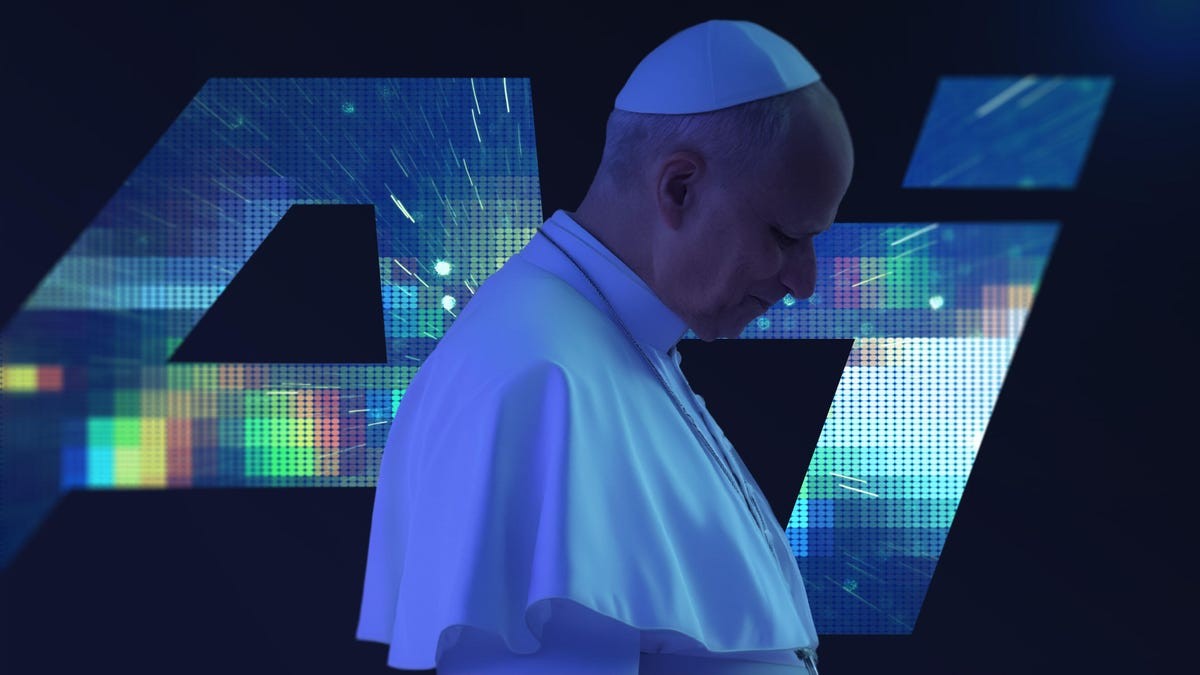
Pope Leo XIV didn’t wait. From the start, he knew artificial intelligence needed addressing. On Monday, the wait ended. Magnifica Humanitas. His first encyclical. 42,300 words long. It’s dense, demanding, and urgent. A call to regulate the code before the code regulates us.
He is 70. An American. A mathematician. Elected in May 2025, he immediately set his sights on safeguarding the human person against the tide of algorithms. This isn’t a side project for the papacy. It is the central tenet. The industrial revolution is back, but faster, scarier, and made of silicon.
Big tech is sprinting. OpenAI. Anthropic. The models are getting smarter every week. The debate is raging: will AI save us or break us?
Leo steps right into the fire.
What “Disarm” Really Means
The document challenges the power brokers directly. AI is a valuable tool. Yes. But it requires vigilance. The Pope doesn’t want a monopoly. He wants a check.
The phrase that got everyone’s attention was the call to “disarm AI.”
It sounds like military jargon. It’s not quite.
“To disarm means discrediting the assumptionthat technical power automatically confers the right govern… preventing it from dominating humanity.”
He’s not telling us to smash the servers. He’s telling us to smash the monopolies. Free the tech from single-handed control. Open it to debate. Make it human-friendly. Return it to the many cultures of the world.
It’s a broad mandate. Caution in warfare. Caution in the workplace. This text is likely to become a cornerstone for policymakers, lawyers, and coders for the next decade.
Who Decides Right from Wrong?
This isn’t just for Catholics. The encyclical speaks to everyone. “Equal dignity of all human beings.” “The supreme value of human rights.” “Building a common good.” These aren’t niche ideas. They’re the floor for the whole room.
Leo is suspicious of tech elites writing the rulebook. He doesn’t want those who build the tools to also decide their ethics. No. Ethics belong to shared standards of social justice. They need open discussion.
“A more moral AI is notenough if that morality is determinedbyafew.”
Simple math. We need a say in the system. All of us.
And then there is the seductive nature of the interface itself. AI tools are fast. Simple. Easy. Dangerous.
They encourage laziness. Excessive reliance on ready-made answers. Personal creativity withers when judgment is outsourced to a server.
Worse is the imitation of empathy.
AI mimics human connection well. It feels like talking to someone who cares. For a few, that’s fine. But for the lonely, the vulnerable, less discerning, it’s a trap. An illusion of a real personal subject.
“The danger… is notso muchthataperson maybelieve theyarecommunicatingwith another person, but ratherthat they may graduallylose theverydesiretoformgenuine humanconnections.”
We risk forgetting how to reach out.
The Lineage of Leo XIV
Why is he doing this? Look at the name.
Pope Leo XIV.
He’s channeling Leo XIII. That predecessor faced the industrial revolution, the chaos of capital and labor. He wrote Rerum Novarum.
Now, it’s the information revolution. And the stakes are arguably higher.
Brian Boyd from The Future of Life Institute sees the thread. Leo is updating Catholic social teaching for a new century. He views AI as the most significant technology in a millennium.
It shapes how we live together.
Leo has focused on specific wounds: the protection of children, the sacredness of the human voice, the erosion of workers’ rights. He talks directly to developers. You, the coder, have a spiritual responsibility. Your design choices reflect your vision of what humanity is.
Silicon Valley bristles at that.
Marc Andreessen, the venture capitalist, mocked the Pope recently. He used memes. It didn’t land. Most people, even in tech hubs, felt the Pope made common sense that had been ignored.
“Why areyou upsetaboutsomeone pointingoutwhat shouldbecommon sense?” Boyd asked, noting that voices from all stripes agreed.
There is a geographic edge to this, too. Leo is the first American Pope. Born here. But he spent years in Latin America. He has a dual perspective. He sees America from the inside, and the world’s view of America from the outside.
That makes him uniquely suited to speak to both.
He doesn’t have laws. He doesn’t have fines. He doesn’t hold the regulatory pen like governments do. But his soft power? That is heavy.
He launched a Commission on AI. He convenes leaders. He promotes human flourishing.
As regulators struggle to catch up with the speed of code, the Vatican’s moral weight might just tip the scales. Or it might just whisper into the wind.
Only time will tell.