
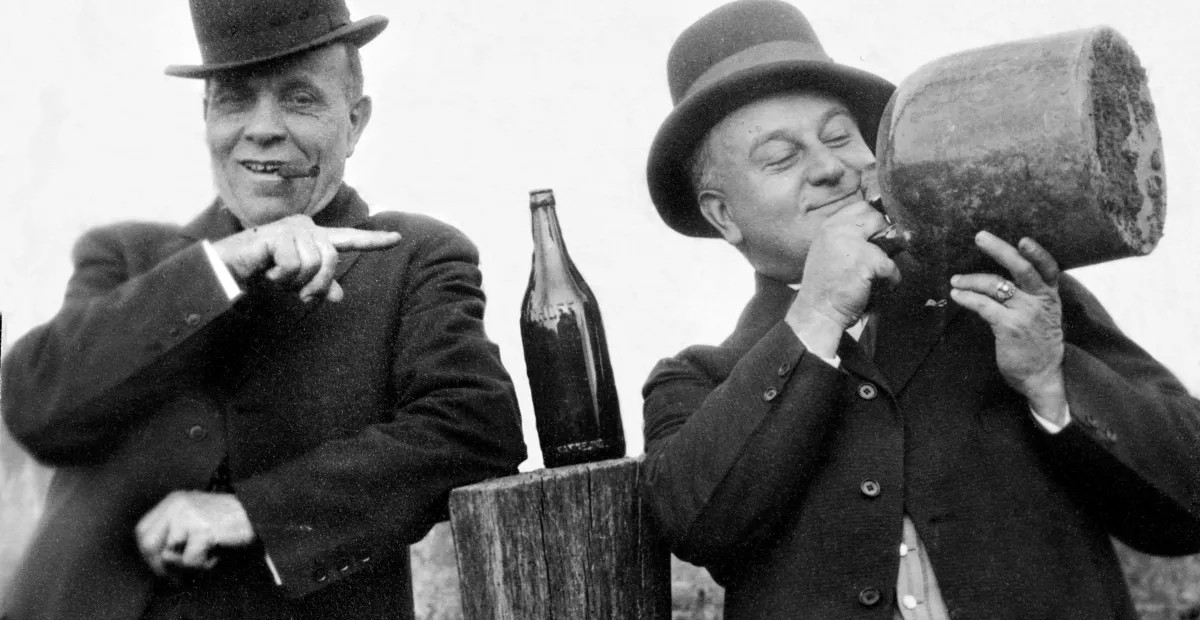
A recent ruling by a federal appeals court has set the stage for a massive legal showdown that extends far beyond the legality of making moonshine at home. By striking down a 160-year-old federal law that prohibits home distilling, the U.S. Court of Appeals for the Fifth Circuit has opened a door that the Supreme Court is almost certain to walk through.
While the case—McNutt v. US Department of Justice —appears to be about alcohol, the real battle is over the very scope of what the federal government is allowed to do.
The Core Conflict: Local vs. National
To understand why this matters, one must look at how the federal government derives its authority. Under the Constitution, Congress has the power to regulate interstate commerce (trade between states) and to collect taxes.
For much of the early 20th century, the Supreme Court took a very narrow view of these powers. In the 1918 Hammer v. Dagenhart decision, the Court even struck down child labor laws, arguing that because the workers themselves didn’t cross state lines, the activity was “local” and beyond federal reach.
However, during the New Deal era in the 1930s and 40s, the Court shifted its philosophy. It recognized that in a modern, interconnected economy, almost everything is linked. This shift was solidified in two landmark cases:
– Wickard v. Filburn (1942): The Court ruled that even a farmer growing wheat for his own personal use could be regulated by the federal government, because his lack of consumption affects the national market price.
– Gonzales v. Raich (2005): The Court applied this same logic to marijuana, allowing the federal government to ban local cultivation to protect national drug policy.
The “Moonshine” Legal Loophole
In the McNutt case, the Fifth Circuit ruled that the ban on home distilling is unconstitutional. Interestingly, the Justice Department (DOJ) did not fight this using the strongest possible argument—the Wickard/Raich precedent that says Congress can regulate all production to manage the national economy.
Instead, the DOJ argued a much narrower point: that the ban was originally meant to prevent tax evasion, and that in the modern era, the government has better ways to track production, making an outright ban “unreasonable.”
By avoiding the broader “commerce power” argument, the DOJ inadvertently created a vacuum. If the Supreme Court agrees with the Fifth Circuit that the ban is unconstitutional because it isn’t “necessary” for tax collection, it leaves the door wide open for a much larger question: Does Congress even have the power to regulate local production at all?
Why the Stakes are Massive
If the Supreme Court decides to revisit and overturn the New Deal-era precedents (Wickard and Raich ), the ripple effects would be felt across almost every sector of American life. The current conservative majority on the Court includes justices, such as Clarence Thomas and Neil Gorsuch, who have expressed interest in returning to a more limited view of federal power.
If the “interconnectedness” of the economy is no longer a valid reason for federal regulation, many cornerstone laws could be jeopardized, including:
– Labor Laws: Minimum wage requirements and workplace safety regulations.
– Civil Rights: Federal bans on discrimination in private businesses (e.g., denying service based on race).
– Healthcare: Laws ensuring access to insurance and medical services.
– Environmental Protections: Regulations that manage how local industries impact the broader environment.
Conclusion
The McNutt case is much more than a dispute over home-brewed spirits; it is a direct challenge to the legal foundation of the modern American regulatory state. The Supreme Court’s decision will ultimately determine whether the federal government has the authority to govern a complex, integrated economy or if it must retreat to a much more restricted, state-by-state model.