
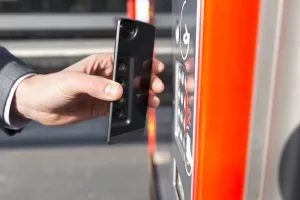
Drop the wallet. Forget the card. Just tap your phone and walk out.
That is the promise of mobile payment. It sounds simple. It works elsewhere. But in Germany, we are still standing in line at the checkout, fumbling for plastic while the rest of the world moves on.
The technology exists. The infrastructure is there. Yet, adoption lags behind the US and China, where this isn’t a novelty—it’s the norm. Why? And more importantly, does it actually work for the average user?
The Current State of Play
We are not starting from zero. If you have ever bought a train ticket via the DB Navigator app or paid for fuel at a participating station, you have used mobile payment. The ecosystem is growing, albeit slowly.
Major retailers are getting on board. You can use your smartphone at:
- Kaufhof department stores
- Saturn electronics outlets
- Major gas stations
- Supermarket chains like Aldi, Edeka, Rewe, and Netto
Even Deutsche Bahn has integrated this with its “Touch & Travel” system. You book. You pay. You ride. No paper tickets. No physical exchange.
But scale matters. According to Vodafone, there are roughly 80,000 payment terminals in Germany capable of handling smartphone transactions. For a population of 84 million, that number might sound big. To a tech observer, it is surprisingly small. Compare that to the density in Asian markets, and the gap becomes obvious.
How It Actually Works
The mechanics are often misunderstood. This is not “digital cash” in the sense that data flies through the air magically. It is usually an extension of existing banking rails, just accessed through a different interface.
Most methods rely on Near Field Communication (NFC). Your phone speaks to the terminal. The terminal talks to the bank. The bank confirms you have funds. The transaction completes.
Some systems use QR codes. You scan. You confirm. You pay. This is less instantaneous but requires less hardware investment from merchants.
The core value isn’t just speed. It is consolidation. One device replaces five.
The Friction Points
Why haven’t we all switched? It is not just stubbornness. It is trust. It is habit. It is the fear of losing a device that contains your entire financial life.
In Germany, cash is king. Not because Germans love paper bills, but because they distrust digital trails. They want tangible control. When you swipe a card, it is a physical action. When you tap a phone, it feels abstract.
There is also the fragmentation issue. In the US, Apple Pay and Google Pay dominate. In China, Alipay and WeChat Pay are everything. In Germany, you have a mix of bank apps, provider-specific wallets, and third-party solutions. It is messy. It is confusing. It is not “one app to rule them all.”
The Bottom Line
Mobile payment in Germany is no longer a “will it ever happen?” question. It is a “how fast will it happen?” question.
The terminals are there. The merchants are participating. The users are sitting on both sides of the aisle—some tapping away, others digging for coins.
The gap between here and there is closing. But for now, if
Tap-to-Pay: How NFC Mobile Payments Actually Work
The standard for mobile payments hasn’t changed much: Near Field Communication. It’s not magic. It’s radio waves. Similar to how RFID chips work in your pet’s microchip or your office keycard, NFC exchanges data over short distances. But your phone isn’t just a wallet yet. It’s a brick until you set it up.
First, you need an app. Then, you register. Finally, you dump your credit card or bank details into the digital vault. Major German carriers have already built these ecosystems. Deutsche Telekom offers MyWallet. Vodafone has its Vodafone Wallet. O2 provides mpass. Even Base Wallet is in the mix.
The Mechanics of the Tap
Here is where the physical act happens. You don’t swipe. You don’t insert a chip. You hold your NFC-equipped smartphone close to the payment terminal.
The proximity triggers the app. The transaction processes instantly. Your account gets debited. Your card gets charged. It feels like magic, but it’s just protocol.
The €25 Rule
Security isn’t an afterthought here. It’s baked into the threshold. For small purchases under €25, no PIN is required. You just tap. It’s fast. It’s convenient.
But cross that €25 line? The system demands more. It asks for your PIN. The friction returns. The security measure kicks in.
“While small amounts under €25 usually require no PIN, payments over €25 trigger a secret number request.”
It’s a balance. Speed for coffee. Verification for groceries. Why change the user experience for every transaction? The €25 limit is the compromise.
Carrier Wars
Which app do you choose? It rarely matters for the transaction itself. The backend is similar. The difference lies in the carrier lock-in. If you’re on Telekom, you’ll likely see MyWallet first. Vodafone users get pushed toward their wallet. O2 users deal with mpass.
Does it matter? Marginally. The NFC chip in your phone doesn’t care which app opens. It only cares that the app is authenticated and the terminal is listening. But for the average user, the app is the interface. It’s the visual layer of your money.
Why It Matters
This isn’t just about convenience. It’s about the death of the plastic wallet. As NFC becomes standard, carrying physical cards becomes optional. Your phone is the key. But only if it has the chip. Only if you’ve done the setup.
Most modern flagships have it. Older models? Sometimes. Check your specs. Look for the NFC symbol. If it’s not there, you’re stuck with the card.
The technology is mature. The apps are live. The terminals are everywhere. The only missing piece is the habit. Tap to pay. It’s not coming. It’s here.