
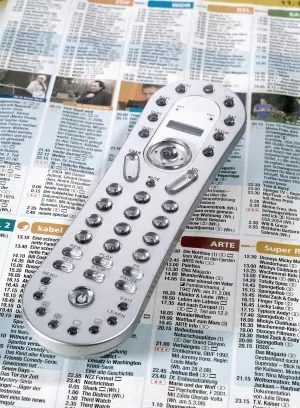
The era of the slab-thin TV with razor-sharp 4K resolutions and immersive 3D capabilities is here. But the hardware upgrade has hit a wall. The interface hasn’t kept pace. For decades, the remote control was the undisputed king of living room technology. Now, its reign is effectively over.
Manufacturers are pivoting hard. This spring, the focus has shifted away from mere display specs toward new TV control concepts that actually match the sophistication of the screens themselves. We are looking at a fundamental shift in how we interact with content.
Beyond the Clicker
The standard clicker is becoming obsolete. It’s clunky. It requires pointing, pressing, and often, a second screen (your phone) to navigate complex menus. The industry response? Three distinct paths to kill the old remote:
- Voice Input: Stop typing. Start talking.
- Gesture Control: Wave your hand. Move your body. Let the TV see you.
- Hybrid QWERTZ Interfaces: For those who still need to type, the back of the remote is changing.
This isn’t just a gimmick. It’s a necessary evolution. As TV interfaces become more complex, the traditional button-based navigation becomes a bottleneck. Users are tired of digging through nested menus. They want instant access.
Why This Matters for You
If you’ve ever struggled to log into a streaming app with a directional pad, you know the pain. The friction is real.
Voice control eliminates this friction. It’s faster. It’s intuitive. But it requires a microphone array and, crucially, robust cloud connectivity.
Gesture control adds a layer of physical interaction. Think of it as a remote that doesn’t need to be held. You can pause, skip, or adjust volume without ever lifting a finger from the couch. The downside? It can be finicky. Lighting conditions matter. Background noise matters.
And then there’s the QWERTZ keyboard trend. Seen prominently in European markets, this feature acknowledges that sometimes you do need to type. Searching for a specific movie title? Typing is still faster than speaking, especially in noisy households. Integrating a mini-keyboard into the remote’s back solves the “I need to search for something obscure” problem without requiring a separate device.
The Future is Hybrid
None of these technologies is perfect on its own. Voice commands can fail in a loud room. Gestures can be misinterpreted. Physical keyboards are bulky.
The winning formula is likely a hybrid approach. A remote that combines a traditional grip for precision with voice activation for speed and gesture recognition for convenience.
The TV of tomorrow isn’t defined by its pixels. It’s defined by how easily you can tell it what to do. The remote control as a standalone, button-heavy device is fading. The new controllers are smarter, more responsive, and, for the first time, actually feel like they belong in the modern living room.
We’re not quite there yet. The learning curve is real. But the direction is clear. The clicker is dying.
Voice, Gesture, and Keyboard: The Next Generation of TV Control
Apple’s iPhone made voice control mainstream, and while the tech isn’t flawless yet, it’s clearly pointing toward how we’ll interact with devices for years to come. TV manufacturers aren’t all moving in lockstep though. They’re taking different paths to get there.
Samsung embeds microphones directly into the TV chassis. LG and Sony? They put them in the remote. The difference matters. Samsung lets you wake the TV and change basic functions like volume with your voice. LG and Sony lean harder into search. It’s less about turning the thing on and more about finding content.
Nuance’s Dragon TV and the Future of Voice Search
Nuance Communication is pushing Dragon TV, a development platform designed specifically for TV makers. It handles more than just simple commands. You can ask, “What’s on Arte at 10 PM?” or “Find movies with Brad Pitt.” The system filters out background noise using Far-Talk technology, so you don’t have to shout over the football match to change the channel.
It’s not just for the TV itself. The platform aims to control set-top boxes, social media, and email too. Rumors swirl that Apple might use Dragon TV in its iTV by late 2012. That’s a massive claim if true. It would mean voice isn’t just a gimmick but a core navigation layer.
Gestures and the Camera Revolution
Samsung took a riskier route with its Smart TV ES 8090. They integrated a camera to read hand gestures. Raise your hand, and an arrow appears on screen. Point to it up or down. Volume or channel changes. No remote required.
LG’s approach is subtler. Their “Magic Remote” for the Cinema 3D series works like a Wii controller. It uses an accelerometer to move the cursor on screen. It’s particularly good for navigating web pages on the TV. You can also use voice commands or gestures if you prefer getting physical.
The Return of the Physical Keyboard
Here is where things get interesting. Both LG and Sony are launching TVs with reversible remotes in 2012. Flip the remote, and you reveal a full QWERTZ keyboard. This isn’t a gimmick. It’s about usability. Typing a URL or a search query on a D-pad or voice interface is slow. A physical keyboard is fast.
These keyboards are designed to power Google TV devices. If you’re a heavy internet user, this matters. Navigating YouTube or checking email on a TV without a proper keyboard is painful. The reversible remote solves that friction.
It’s a messy transition period. Voice is getting better. Gestures are still finicky. But keyboards? They’re reliable. Until voice AI finally understands context without you repeating yourself, the physical keyboard remains a pragmatic choice.