
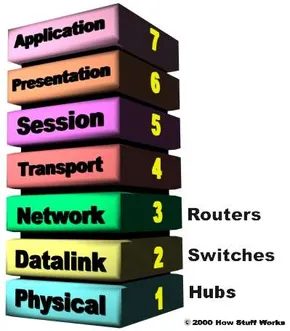
You likely know that standard network switches operate at the Data layer, also known as Layer 2, of the OSI model. They move packets based on MAC addresses, which is fast but limited in scope. Some devices, however, break that mold. They incorporate router features and operate at the Network layer, or Layer 3. A Layer 3 switch is incredibly similar to a router, but it doesn’t stop there. It leverages hardware optimizations to pass data as fast as a Layer 2 switch while making intelligent routing decisions.
Why Layer 3 Switches Are Faster Than Routers
The fundamental difference lies in the hardware. A standard router looks at Layer 3 source and destination addresses to determine the path for each packet. It processes this logic in software. A Layer 3 switch, on the other hand, is built on switching hardware. This architecture allows it to make Layer 3 decisions, just like a router, but at a speed that typically outpaces dedicated routing gear within a Local Area Network (LAN).
Many of Cisco’s Layer 3 switches are essentially routers that operate faster because they are built on “switching” hardware with customized chips inside the box. These chips handle the heavy lifting that would otherwise slow down a traditional router.
How Dynamic Hardware Reprogramming Works
The pattern matching and caching mechanisms on Layer 3 switches are similar to those on routers. Both use a routing protocol and a routing table to determine the best path for traffic. However, a Layer 3 switch has the ability to reprogram the hardware dynamically with current Layer 3 routing information.
This dynamic reprogramming is what allows for faster packet processing. Instead of a processor thinking through every packet, the hardware tables are updated with the latest routing data. On current Layer 3 switches, information received from routing protocols is used to update these hardware caching tables. The switch then uses this cached data to make high-speed forwarding decisions.
A Layer 3 switch uses routing protocols to update hardware caching tables, allowing it to make Layer 3 decisions at Layer 2 speeds.
Which Device Should You Use?
If you are working within a LAN environment, a Layer 3 switch is usually the faster choice. It combines the intelligent path determination of a router with the raw throughput of a switch. For everyday users, this means less latency and smoother data flow across your internal network. For network administrators, it means a single device can handle both switching and routing tasks without becoming a bottleneck.
So, is it a router or a switch? In many modern networks, that distinction is blurring. The device that matters most is the one that can make smart decisions at high speed, and Layer 3 switching is how that happens.