
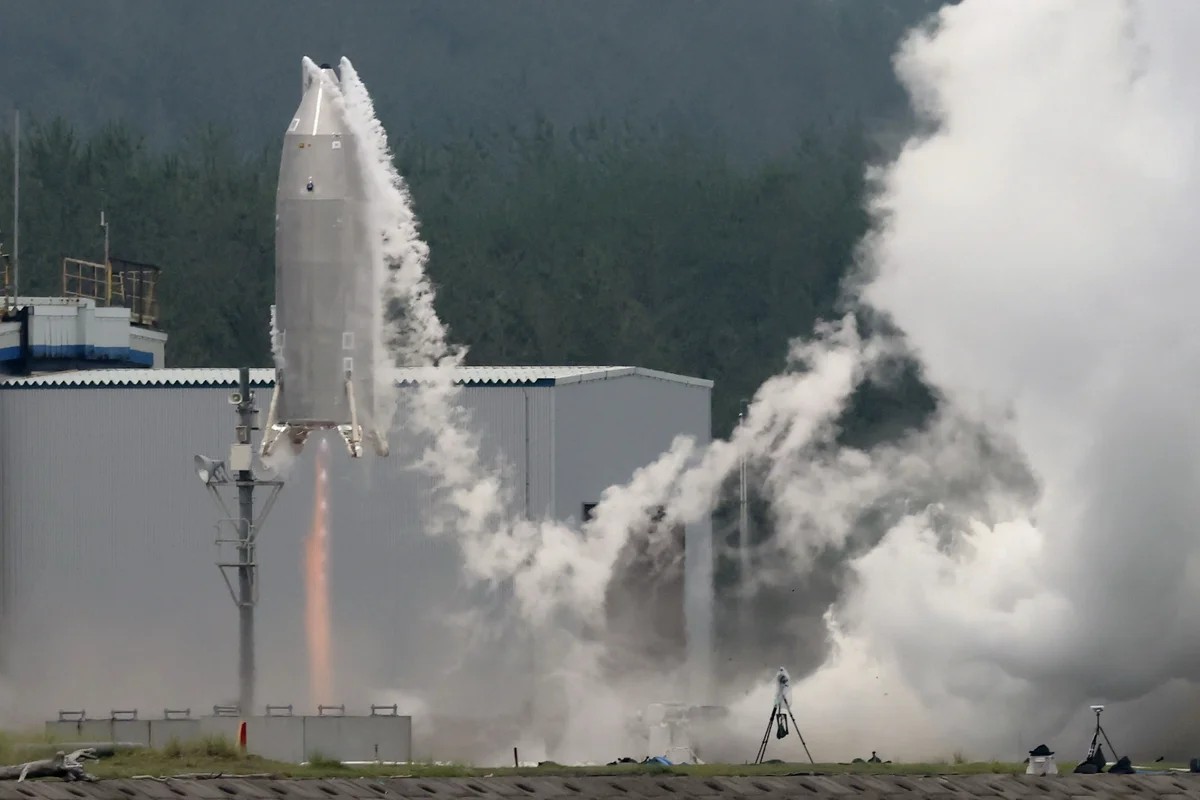
Japan did it. For the first time, JAXA successfully landed an experimental reusable rocket. It’s a trick SpaceX pioneered. But now everyone’s catching on.
The Hop
Over the weekend at the Noshiro Testing Center in northeast Japan, the RV-X (Reusable Vehicle eXperiment) took flight. It didn’t go far. It lifted eleven meters off the ground. Just a hop. Then it traveled sixteen meters away. And landed. Upright.
“It signifies a historic breakthrough for my country…” — wait, no that was China.
JAXA’s win was more technical demonstration than operational necessity. Still. It marks a major milestone. The country wants to push higher soon. Around 100 meters next. Maybe orbital launches down the line.
China’s Big Swing
This test flight happened twenty-four hours after China landed a reusable rocket. Different scale, same principle. While Japan was jumping ten feet, China used its Long March 10B to send a satellite into orbit using a sea-borne net capture system.
The Long March 10B isn’t an experiment. It’s a working beast. China Aerospace Science and Technology Corporation called it a foundation for improving space access. Big words for big ambitions.
The New Normal
Why do this? Because single-use rockets are expensive waste. Reusable boosters slash the cost of the launch hardware. They make spaceflight look less like a disposable party balloon and more like an airline schedule. You fly. You land. You fix it. You fly again.
SpaceX led this charge. The Falcon 9 landed for the first time back in 2015 orbital flight. Since then? They don’t stop. The Falcon Heavy landed. Starship’s Super Heavy booster landed.
The Falcon 9 is still the workhorse. Launching roughly once every two days.
Just this month, booster B1067 hit a new record. Its thirty-sixth flight. Up from Cape Canaveral. Down onto a drone ship in the Atlantic.
The barrier to entry for landing rockets is dropping fast. Who will be next?