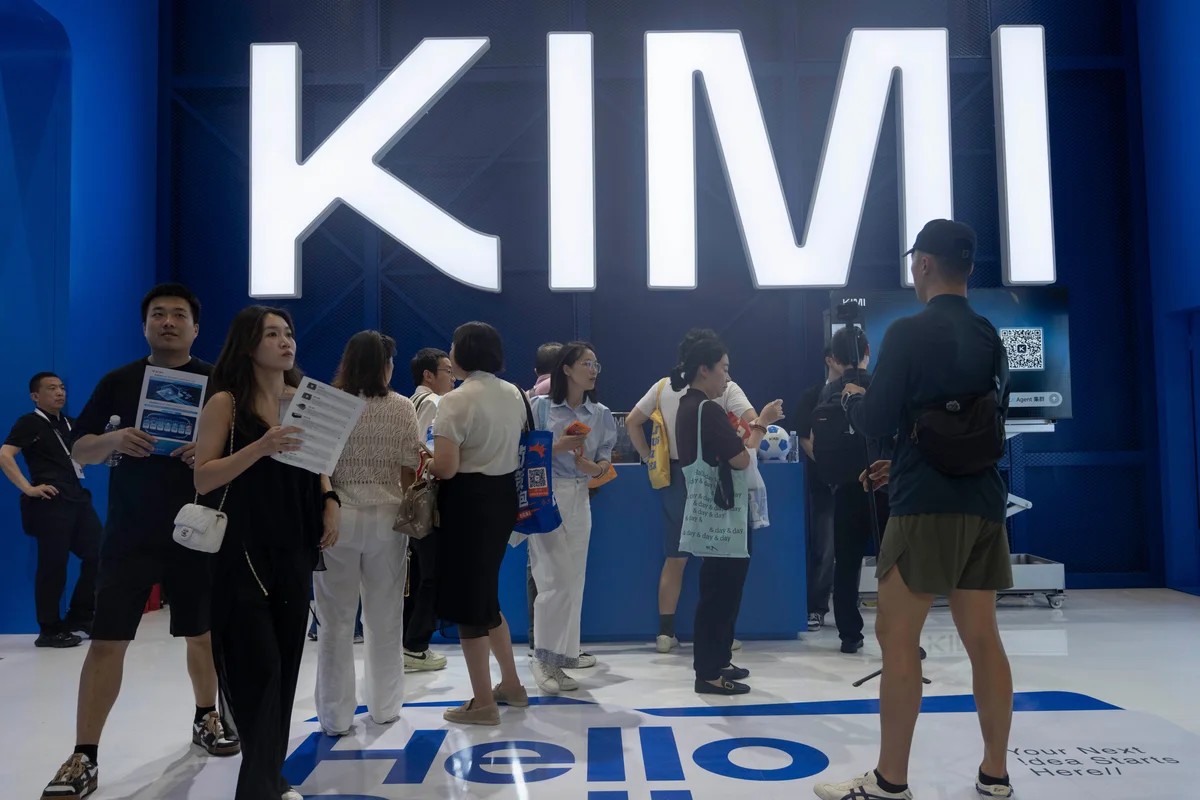
China’s Kimi AI is trending. Or panicking. Depending on who you ask.
The latest update from Moonshot AI, the Beijing-based firm behind Kimi, seemed to match the performance of leading American models. It wasn’t just a slight improvement. It was a shock to the system.
Stocks dropped. Fear spiked.
Suddenly, the myth of American tech dominance felt fragile. Was the US losing its AI lead? Or was this something else entirely?
Now, Michael Kratsios, a top technology advisor to Donald Trump, says he knows exactly what happened. His answer? Stealing.
Kratsios claims Moonshot’s new K3 model wasn’t built from scratch. He argues it was distilled from Fable, Anthropic’s most sophisticated US model. In his post on X, he called it “large-scale, covert industrial distillation.”
“We have information that Moonshot AI distilled Anthropics Fable for the development of our K3 model,” Kratsios wrote. He called it unacceptable. He called it theft of proprietary US technology.
The term “distillation” needs unpacking. It’s not simple copy-pasting. It’s a process where smaller AI models are trained on the output of larger, more expensive systems. It’s a shortcut. A way to lower training costs while mimicking high-end performance.
But shortcuts can be illegal. And they can be dangerous.
The Sanctions Threat
US Treasury Secretary Scott Bessent didn’t mince words.
On Wednesday, he posted on X that he was considering putting Moonshot AI on a trade blacklist. Sanctions? On the table.
The Trump administration isn’t just making noise. They’re preparing to act. And they aren’t alone.
The State Department ordered a global push back in April. Their goal? To expose widespread efforts by Chinese companies to steal intellectual property from US labs. Moonshot was named specifically in a diplomatic cable seen by Reuters.
Anthropic’s public policy executive, Sarah Heck, added her voice to the chorus. Chinese theft of US models creates serious national security risks, she said. Simple as that.
Kratsios also dropped another bombshell. He claims Moonshot acquired servers containing Nvidia’s advanced GB300 AI chips. He says they’re being used in Thailand to train models. Nvidia chips are the frontline in this global AI war. Control the chips, control the future.
China’s Response
Moonshot stayed silent. No immediate comment.
But Beijing didn’t.
Liu Chang, spokesperson for the Chinese embassy in Washington, called Kratsios’ comments “entirely unfounded.” China respects intellectual property, he said. It’s a standard defense. But the tone was sharp.
“Relevant individuals in the United States must respect facts, discard prejudice, and stop smearing China’s achievements,” Liu said.
Foreign ministry spokesperson Lin Jian agreed. At a press briefing on Thursday, he accused US officials of politicizing science and technology. It’s weaponization, he claimed. It disrupts global AI development.
It’s a familiar script. Accusations fly. Denials follow. Tensions rise.
But the stakes have never been higher.
A Pattern of Allegations
This isn’t the first time Anthropic has raised the alarm.
In February, the company announced that three Chinese firms—DeepSeek, Moonshot, and MiniMax—were using its Claude model improperly. They created over 16 million interactions. They used roughly 24,000.fake accounts. They violated terms of service. They ignored regional access restrictions.
The goal? To improve their own models.
OpenAI warned lawmakers about similar tactics by DeepSeek in February. Targeting the nation’s leading AI companies. Replicating models. Training them for profit.
The US government pulled Anthropic’s Fable and Mythos models in April due to security concerns. A month later, Moonshot unveiled Kimi K3. A 2.8 trillion-parameter system. It claims to be the world’s largest open-weight AI. And it claims performance approaching Fable.
The timing is suspicious. Or strategic. Or both.
A senior Trump official noted in February that DeepSeek’s model was trained on Nvidia’s most advanced chips. Potential violation of US export controls.
The State Department’s cable warned that unauthorized distillation campaigns enable foreign actors to release products that look impressive on benchmarks. At a fraction of the cost. But without replicating the full performance.
Does it matter?
If the model works, does the origin matter?
The Real Cost
The economic implications are massive. The potential military uses are terrifying.
China’s open AI ecosystem is shrinking the gap with US systems. Quickly.
But can you build trust on stolen tech? Can you rely on a system that might be watching, learning, and waiting?
Kratsios calls it undermining American research. Bessent calls for sanctions. Moonshot stays quiet.
The fight for AI dominance is no longer just about speed or scale. It’s about ownership. And security. And who gets to decide what the future looks like.
Kimi K3 is out. The accusations are out.
What happens next?