
You are Link. Your controller is in your hands. You stand at the mouth of a virtual icy cave. Somewhere inside, a Heart Piece waits. It is the goal. To get it, you must solve three puzzles. Large blocks of ice block your path.
You scratch your head. You sigh. Frustration hits. Then, you move the blocks. North. East. South. West. The right combination clicks.
Victory. The sweet sound of achievement fills your ears. You have mastered the challenge. The Heart Piece is yours.
Solving a hard puzzle feels good. It makes you feel smart. The Legend of Zelda is not alone in this. Other games teach real life skills. They build perseverance. They force critical thinking.
Take “Madden NFL.” It is competitive. It teaches sportsmanship and quick decisions. Take “Portal 2.” It is heavy on puzzles. It demands planning. It requires communicating effectively with others.
This is just the start.
There are many video games that teach more than just fun. They teach life. But parents need to be careful. Check the rating. Look at the Entertainment Software Rating Board (ESRB) label. It works like movie ratings. It tells you what content is inside.
Here is what those labels mean:
- EC (Early Childhood) : For kids 3 and older.
- E (Everyone) : For ages 6 and up.
- E10+ (Everyone 10+) : For ages 10 and up.
- T (Teen) : For ages 13 and up.
- M (Mature) : Only for 17 and older.
- AO (Adults Only) : 18 and above. Strictly for adults.
- RP (Rating Pending) : Not yet reviewed. Usually seen on ads for unreleased games.
Ignore the rating and you risk exposing kids to inappropriate content.
The real value lies in what happens next. After the safety check, comes the skill building. Specifically, social interaction. And problem-solving.
The Importance of Social Skills and Problem-solving
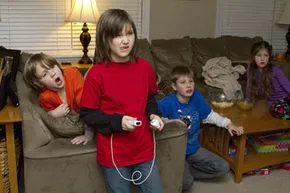
Social skills aren’t just innate. They are learned. And for many kids, the classroom for these lessons is a screen. We often assume play is just play. It isn’t. It’s rehearsal.
Take the controller. In games with too many players, you have to wait. You have to share. Racing games like Mario Kart force this. Sports titles like Madden NFL do it too. You pass the controller. You wait your turn. You learn fairness. It’s basic. But it’s foundational.
Teamwork in Virtual Spaces
Some games go deeper. They demand collaboration. World of Warcraft is the prime example. It’s an MMORPG. Rated T by the ESRB. Thousands of players exist simultaneously. But you can’t solo everything. You need a team.
Virtual teams must meet. They must work toward a common goal. Your actions ripple outward. If you fail, the group suffers. If you succeed, the group advances. Teens learn to deal with both outcomes. They learn that individual effort impacts collective success. It’s a crash course in group dynamics. Without the awkwardness of a real-life office or school project.
Problem-Solving and Pattern Recognition
Problem-solving is central to gaming. It’s not just about reflexes. It’s about strategy. Kids learn to spot patterns. They learn to plan.
Consider The Legend of Zelda. It’s filled with puzzles. Complex levels. When Link finds an item, he must use it. This unlocks areas that were previously blocked. The puzzles themselves often require those same items. Obstacles are everywhere.
This mirrors real life. Think of a difficult math concept. You have to work through the logic to pass the test. The game teaches patience. It teaches that effort yields access.
Cognitive Sharpness and Confidence
Portal 2 keeps the mind sharp. Rated E10+ by the ESRB. It throws unique, mind-bending puzzles at you. You navigate new environments carefully. You use available materials.
This isn’t just about solving a riddle. It’s about perseverance. You think cognitively. You struggle. You don’t give up. Eventually, you hit the “a-ha!” moment. You find the solution. You feel smart. This boosts confidence. It’s not just stimulation. It’s validation.
Learning That Actions Have Consequences
Modern games demand critical thinking. Your choices matter. They affect the outcome.
Role-playing games (RPGs) let you breeze through levels. Dungeons. Enclosed spaces. Random enemies. You can stay on the set course. Or you can go off track. You can explore unknown territories.
SquareEnix’s Dragon Quest series (mostly E10+) lets you tailor your play. You make moral decisions. You navigate vast, open worlds independently. Battle preparedness is key. But you can run away. Avoiding conflict has consequences later. You can’t ignore the past.
The Sims: Managing Virtual Life
Sims games are different. You navigate a virtual world. You choose what happens to your characters.
Everyday interactions add up. Real-life choices matter. Do you go to work? If you skip work too often, you get fired. You cut costs. You lose luxury items like new furniture. If you go on time every day, you get promoted. You buy nicer things for your virtual family.
It sounds mundane. It can be stressful. Managing work, family, and home upkeep is hard. Playing The Sims might make your child realize how much work you do at home. Unnoticed. Unappreciated.
There are many versions. The Sims Pets. The Sims Medieval. Different platforms. Different ages. The core concept remains. Choices have weight.
The Downsides and The Balance
Video games have downsides. We aren’t suggesting they replace baseball. Or real-world friendships.
But the benefits are demonstrated. Learning social skills. Teamwork. Problem-solving. Consequences. As long as there’s a healthy balance between the real world and the virtual one, there’s no reason not to learn. From the controller.
Breaking the Sedentary Myth
Video games get a bad rap. Sedentary lifestyle. Sitting too long. Bad for health.
Moderation changes everything. It’s an enjoyable hobby. It can encourage movement.
Wii’s Wii Sports. Xbox 360’s Kinect Sports. These focus on physical activity. They make exercising fun. You aren’t just sitting. You’re moving.
More to Explore
There is a lot more information out there. Different genres. Different mechanics. Different lessons. The medium is evolving. So are the skills it teaches.