
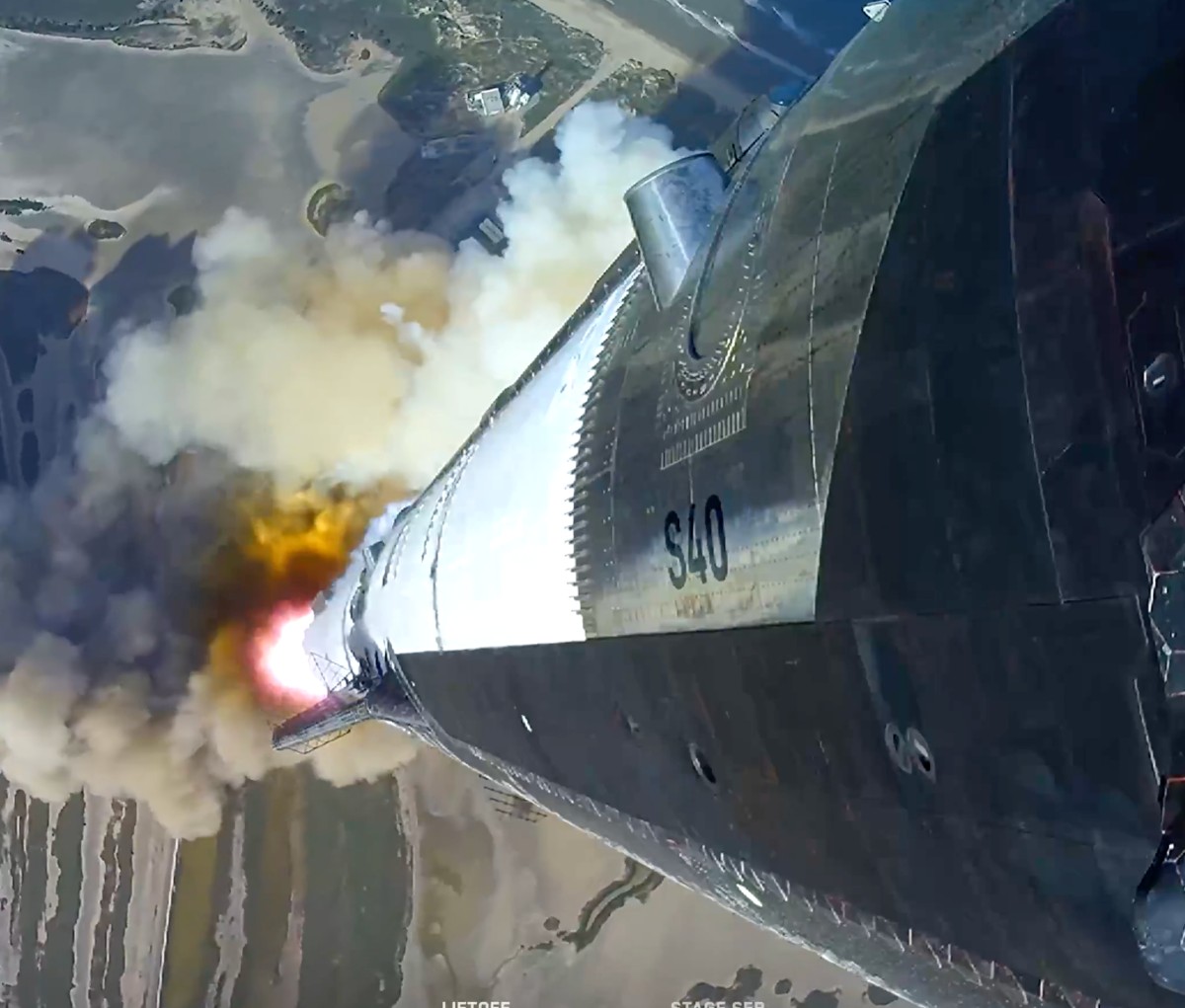
It happened again.
The Super Heavy booster didn’t land. It exploded in the Gulf of Mexico.
SpaceX launched its third-generation Starship on Friday. The upper stage worked perfectly. The payload? Deployed. The big rocket underneath? Gone in a splash. This marks the 13th test of the mega-rocket and the second failure of the Super Heavy booster specifically for this V3 version of the spacecraft.
How the Launch Went: Success Up High, Crash Below
Friday’s mission was a study in mixed results. The launch itself was clean. The Starship V3 upper stage survived. It didn’t lose an engine like it did in May. That’s a fix from the previous attempt.
The upper stage deployed new Starlink satellites. Then it survived reentry. It performed a simulated landing burn in the Indian Ocean an hour after liftoff. When it hit the water, it didn’t tip over and blow up. It floated.
The Ship floated in the water, allowing SpaceX to deploy a drone for close inspection of the heat shield tiles.
This floating capability matters. It lets engineers see how the belly tiles hold up. Previous missions ended with explosions upon water impact. This one didn’t.
Down below, the Super Heavy booster struggled. It flew farther than usual but failed to ignite enough engines for the landing burn. It hit the water faster than expected. Then it exploded.
This wasn’t the first hiccup. A week prior, SpaceX attempted the 13th launch. It aborted immediately after ignition. Engine failures forced a scrub. The team replaced six engines before Friday’s flight. That fix worked for the ascent. It didn’t save the booster’s return.
Why This Matters for SpaceX Stock and Strategy
SpaceX is public now. Since its record-breaking IPO in June, the stock has slipped. It peaked above $200. Friday’s close saw it at $115.
The aborted launch last week caused a dip. Friday’s booster failure triggered another 2% drop in after-hours trading. The losses were later pared back, but the trend is downward. Investors are watching the “fly, fail, fix” cycle closely. Can they sustain the momentum when the biggest rocket in the world keeps crashing?
What Are V3 Starlink Satellites and Do They Work?
Here is the good news. The V3 satellites actually worked.
SpaceX deployed them. The satellites burned up in the atmosphere 20 minutes later. Starship still cannot reach Earth orbit. So yes, they were lost to space. But SpaceX communicated with all of them while aloft.
That communication link is the point.
The V3 satellites are heavier. They are more capable. SpaceX claims launching 60 of them on Starship creates a potential twenty-fold increase in downlink capacity compared to a single Falcon 9 flight. This improves the economics of Starlink. It remains the only profitable part of SpaceX’s business.
Can SpaceX Profit Without Reusable Super Heavy Boosters?
There is a catch. The economics depend on reusability.
If SpaceX keeps destroying the Super Heavy booster, the cost savings vanish. The S-1 unit noted that without a fully reusable system, Starlink expansion would be slower. And more expensive.
The V3 payload proves the upper stage is ready. The communication tech holds up. The heat shields survive the burn.
The booster still crashes.
Will it land next time? Maybe. The stock won’t stop watching. The satellites will keep deploying. The boosters will keep breaking. Until the math works for both, the tension remains.
SpaceX fixes things. They did that with the engines. They did that with the reentry profile. Now they need to fix the landing.